Backland NY is an educational apiary.
We model how to rewild a small-scale apiary through biomimicry.
Our Apiary Study
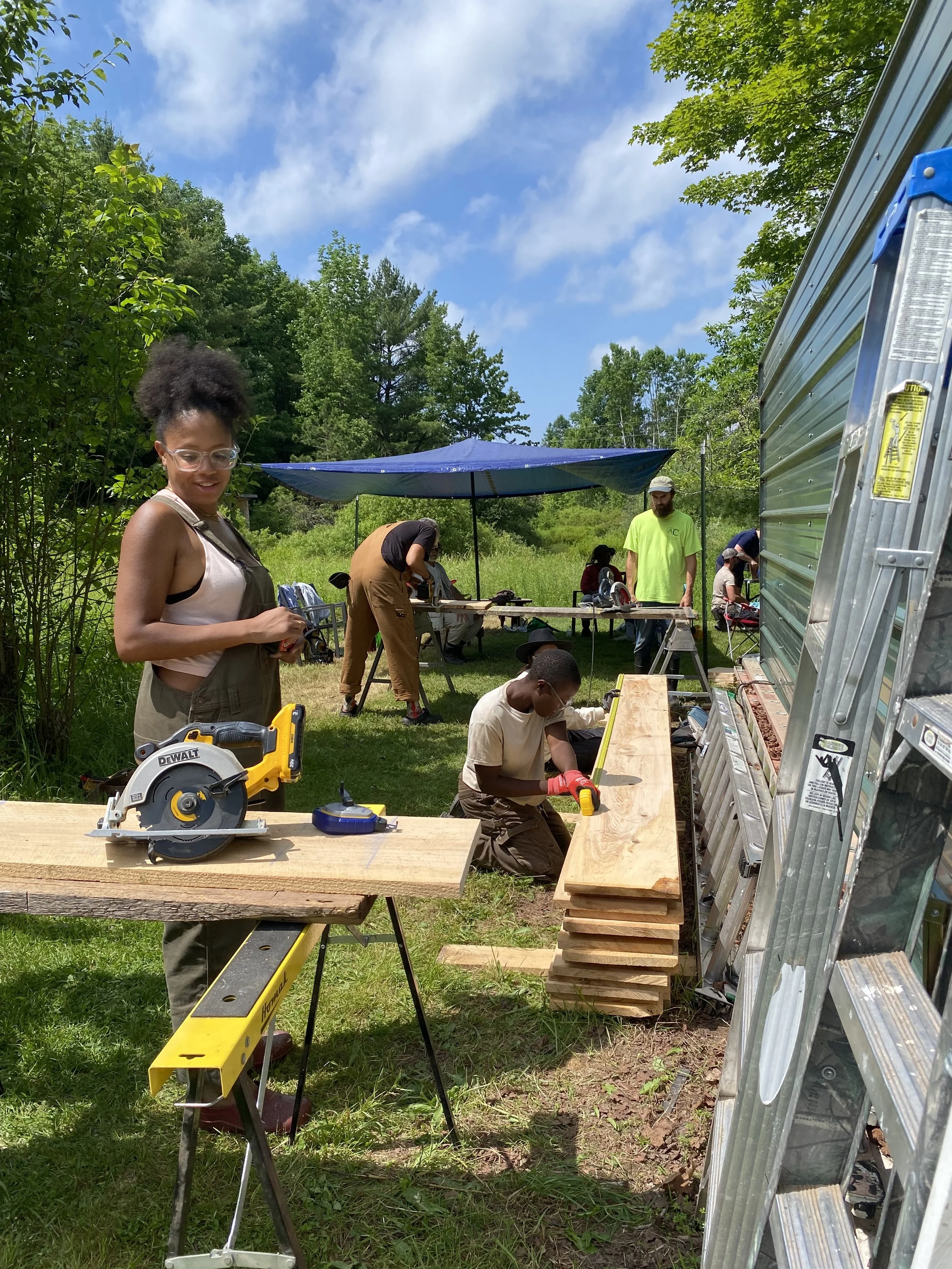
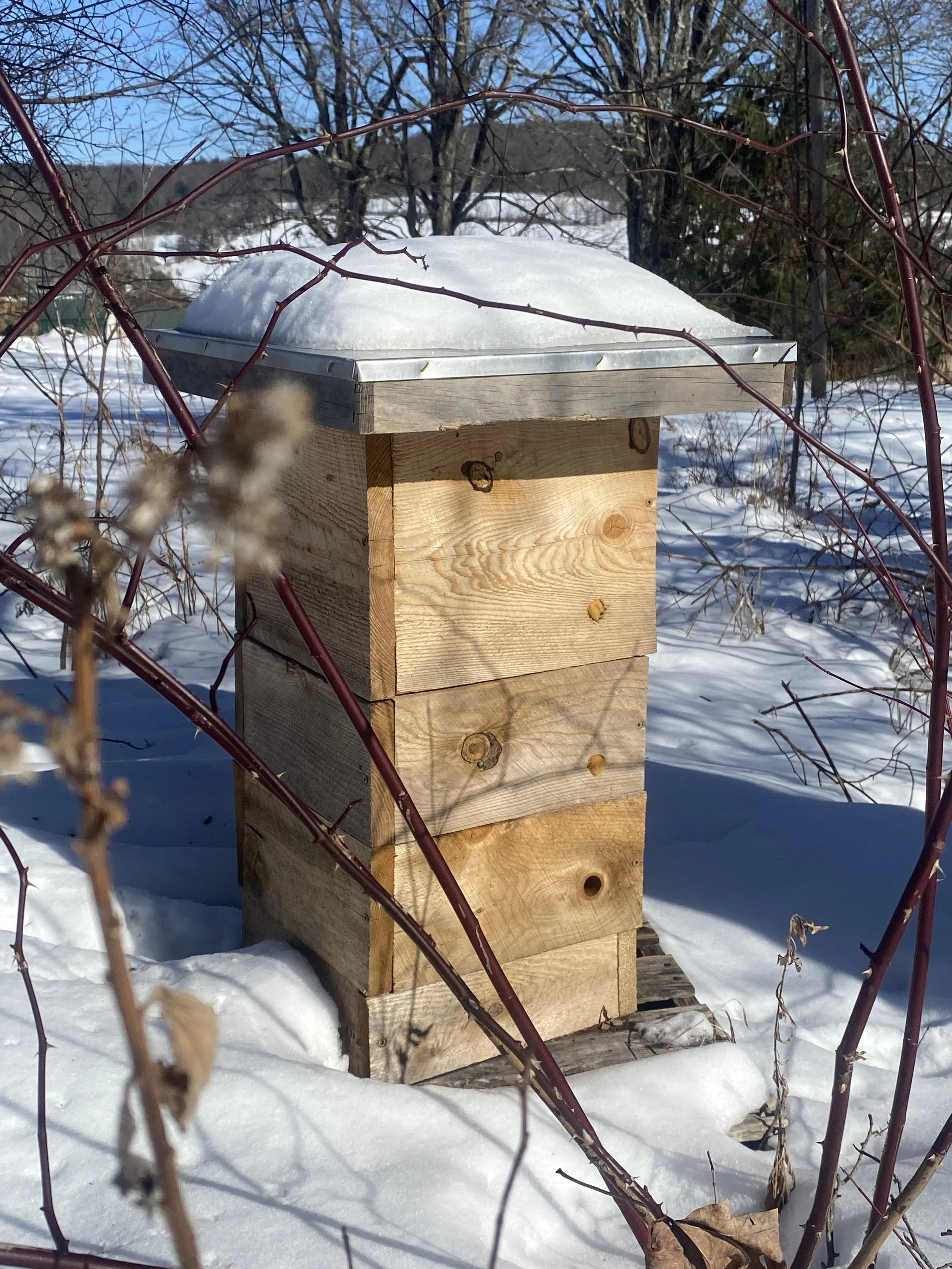
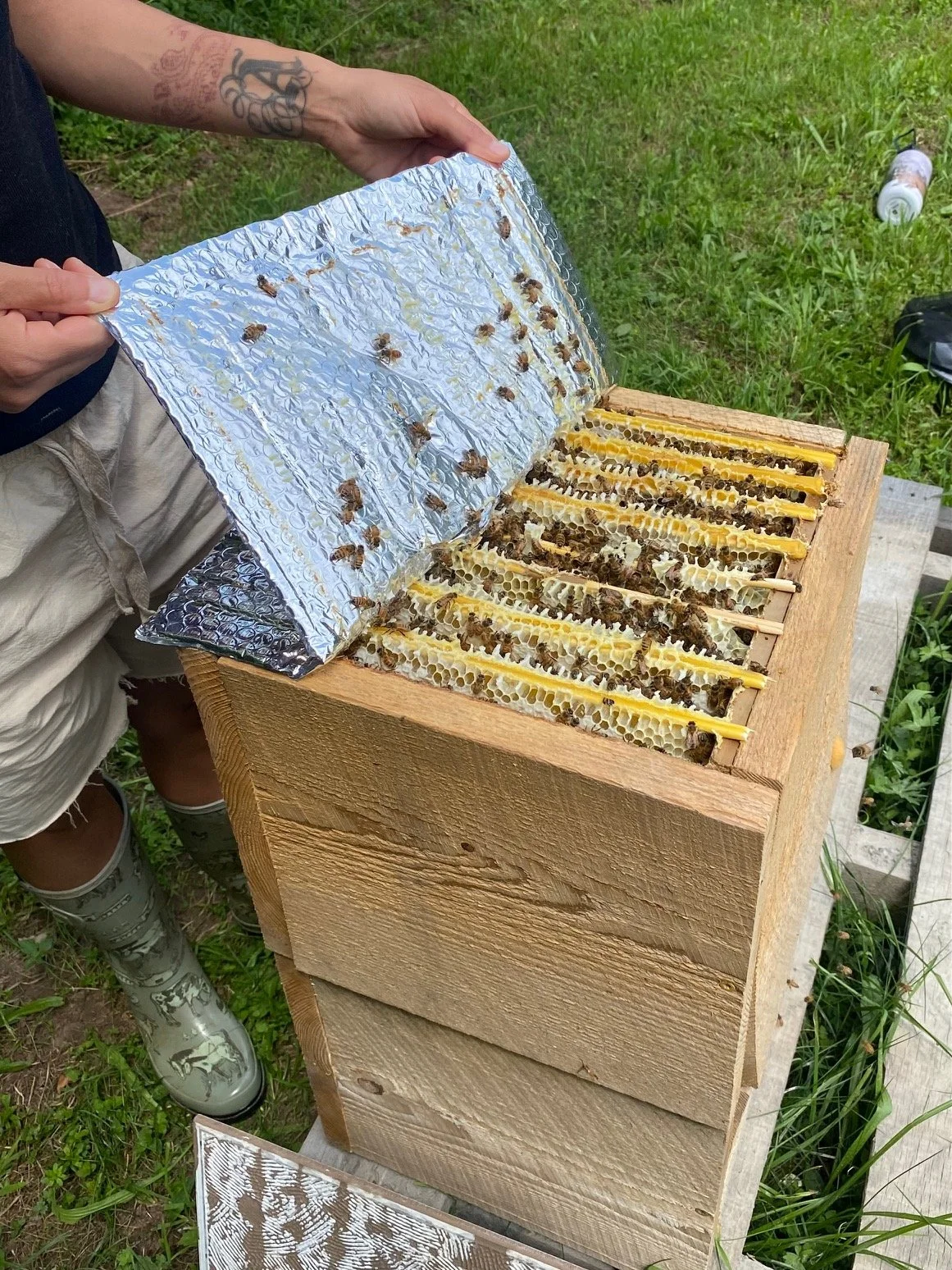
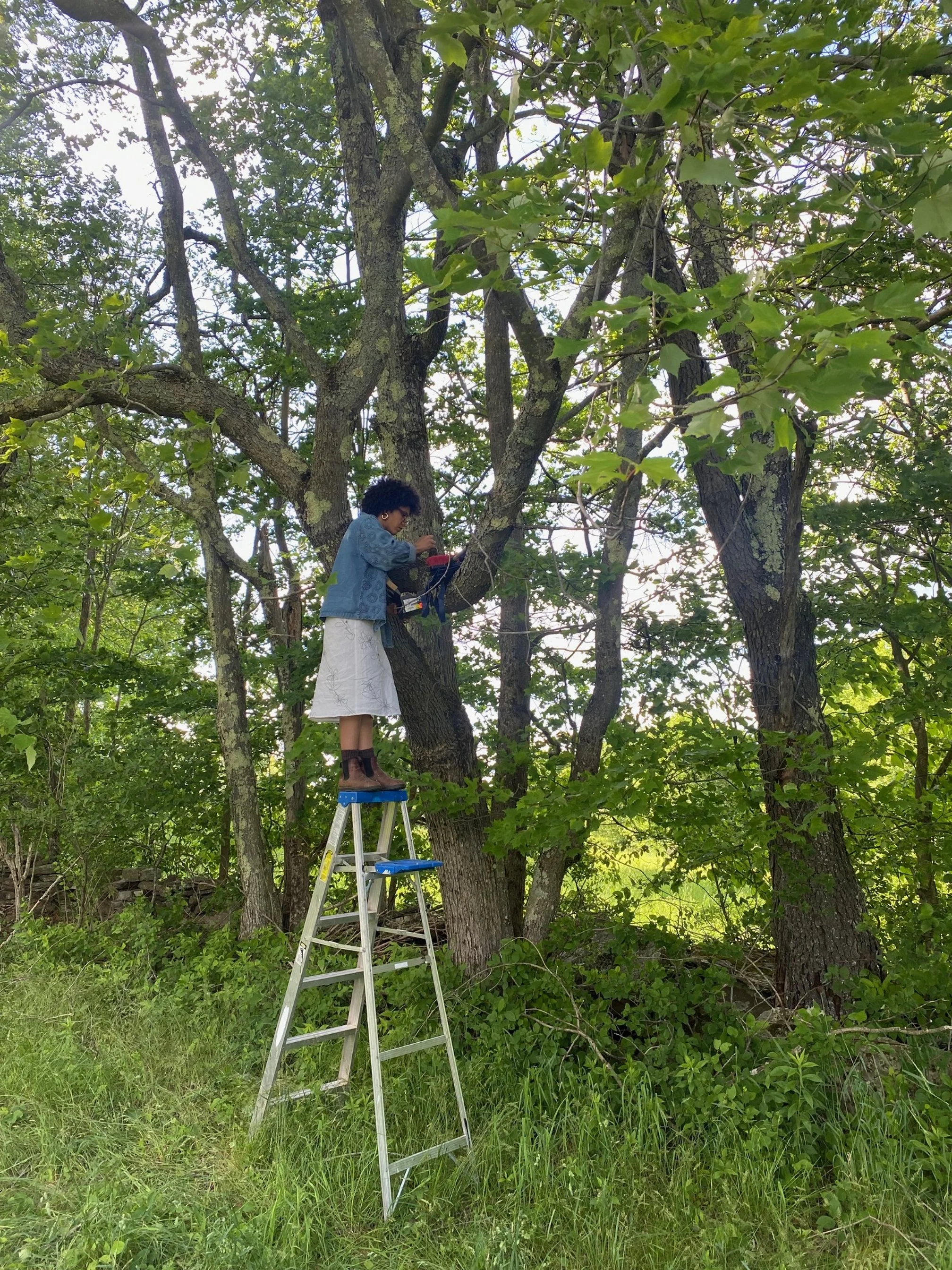
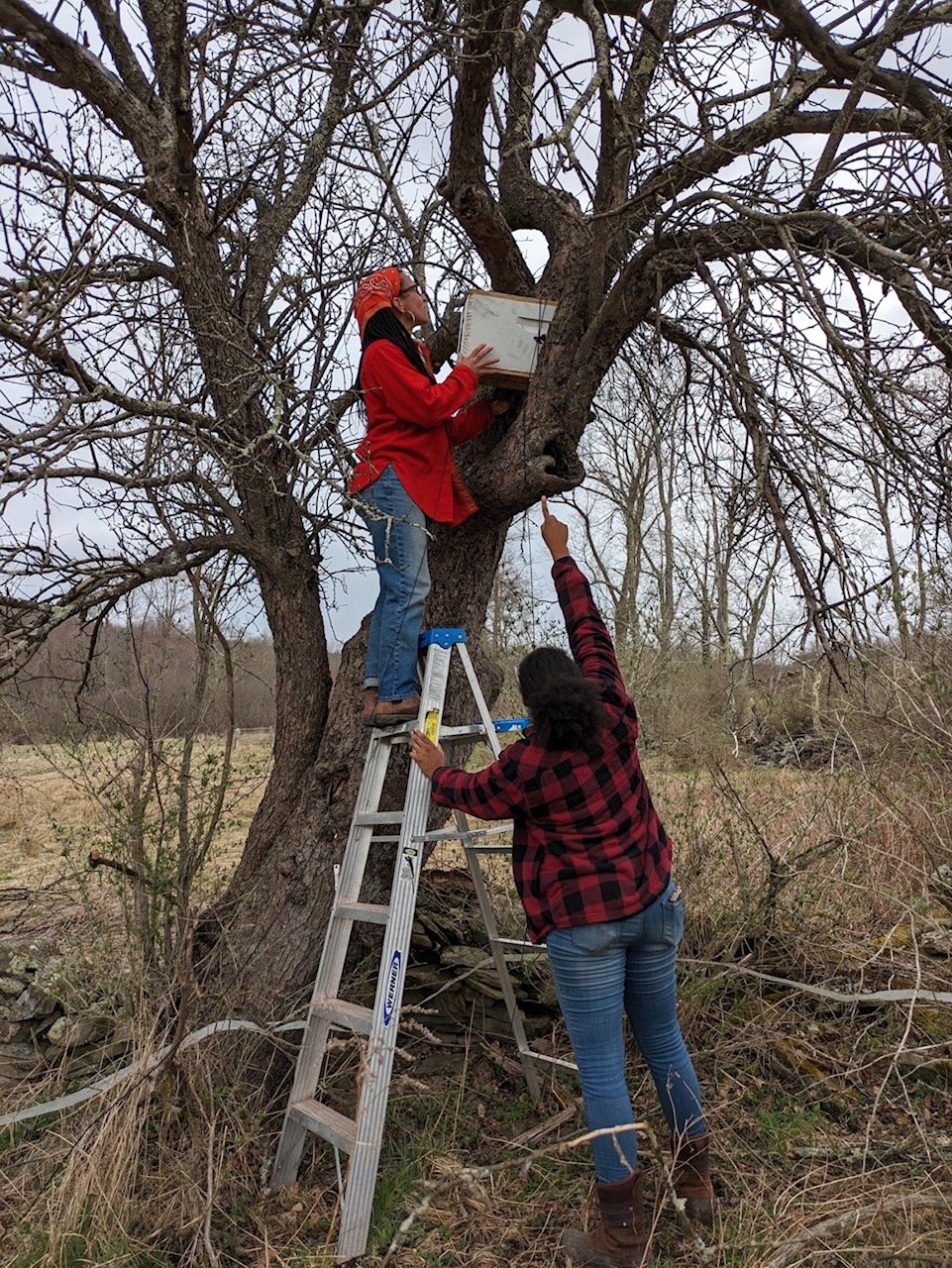
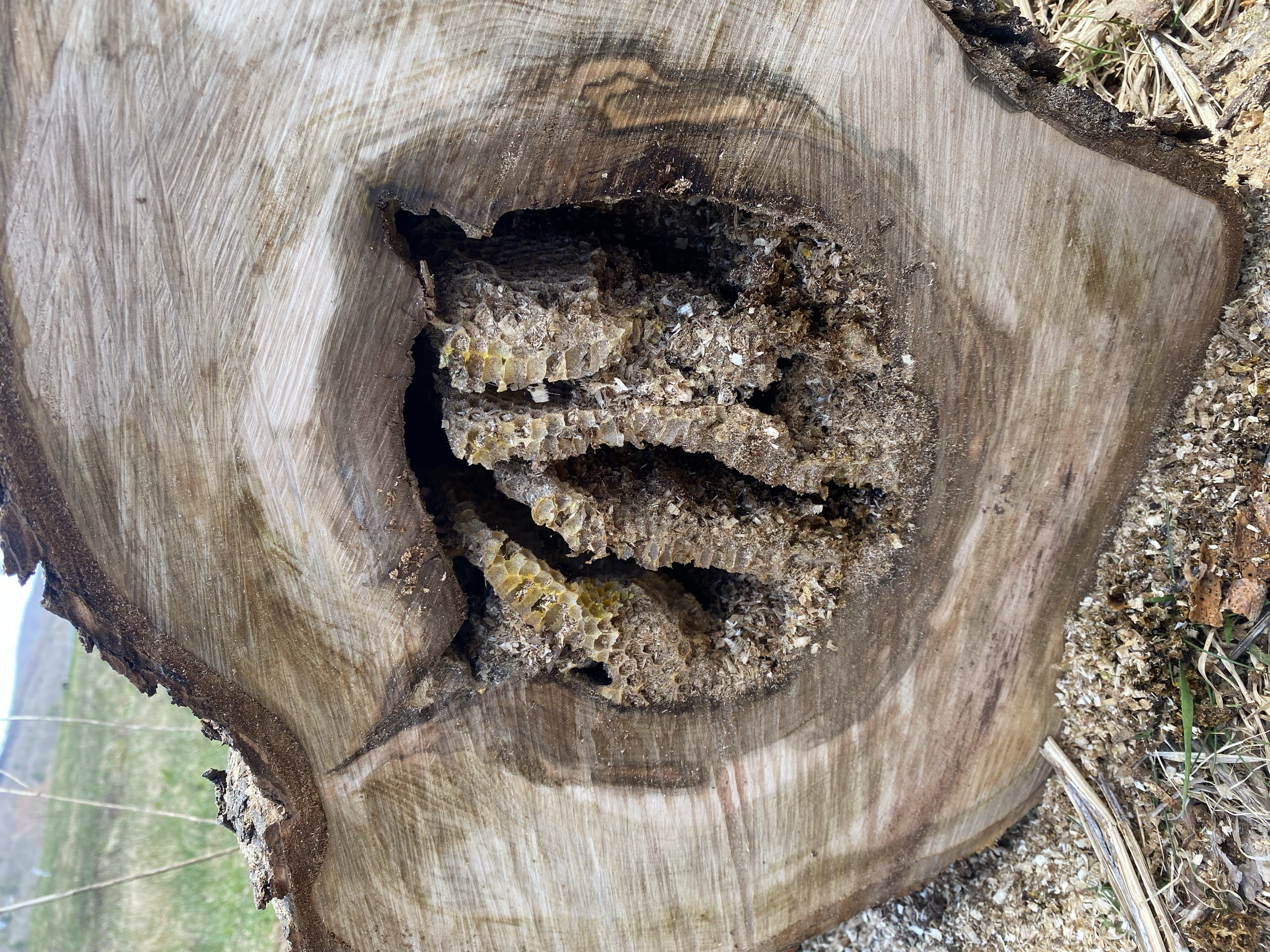
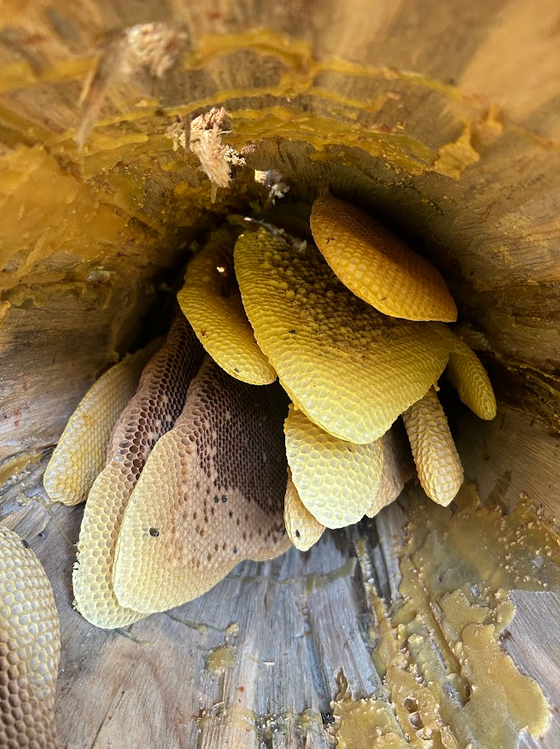
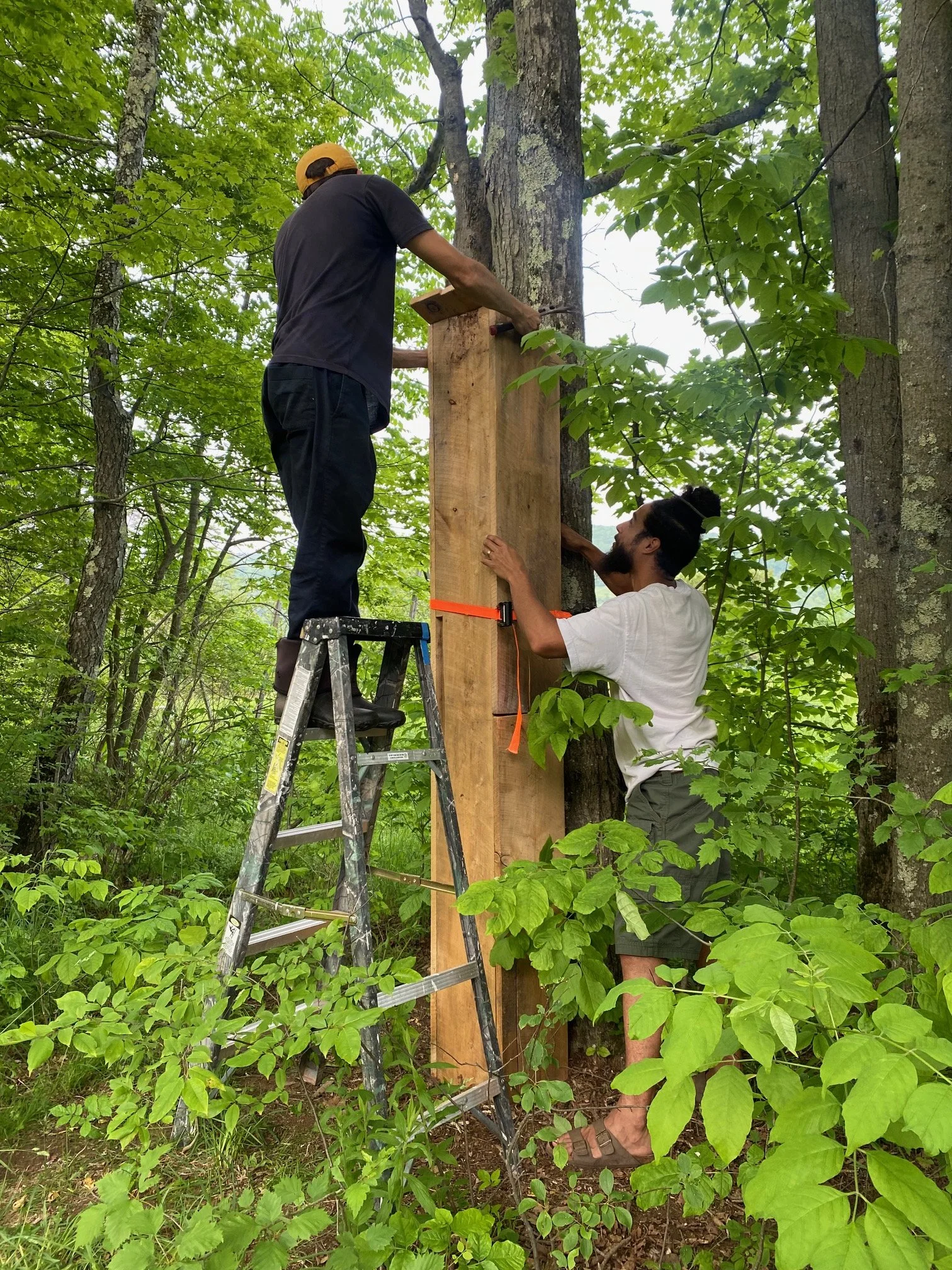
Each year, we attract and observe local swarms to cultivate a self-sustaining apiary. We build custom hives to mimic the interior of a tree hollow. In this way, we optimize adaptation by (1) increasing the availability of nest hollows, (2) promoting healthy honey bee populations in our environment, and (3) decentralizing the buy-treat-feed standard. Ultimately, we educate to establish a new way for a new generation of biomimicry beekeepers.
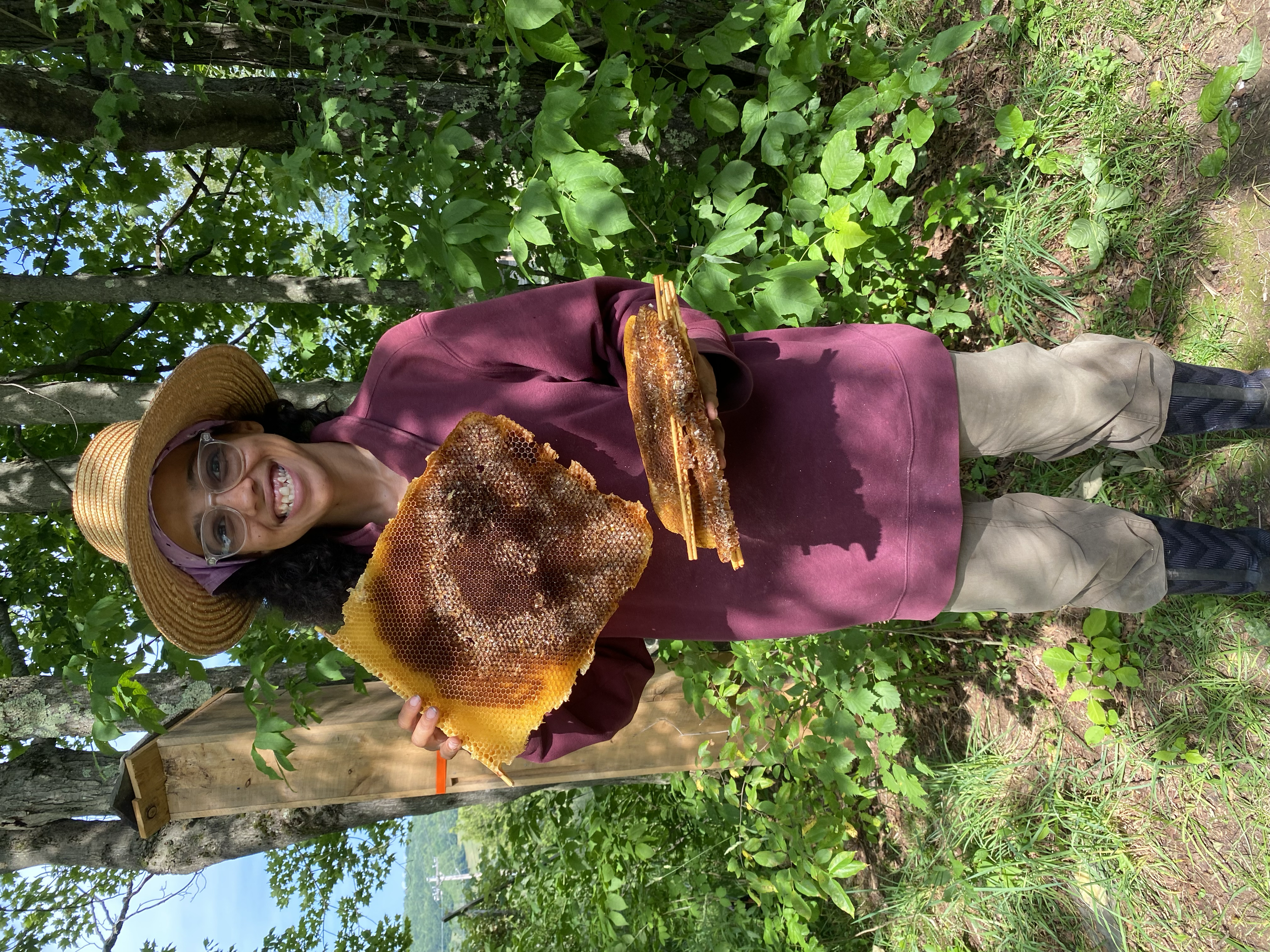
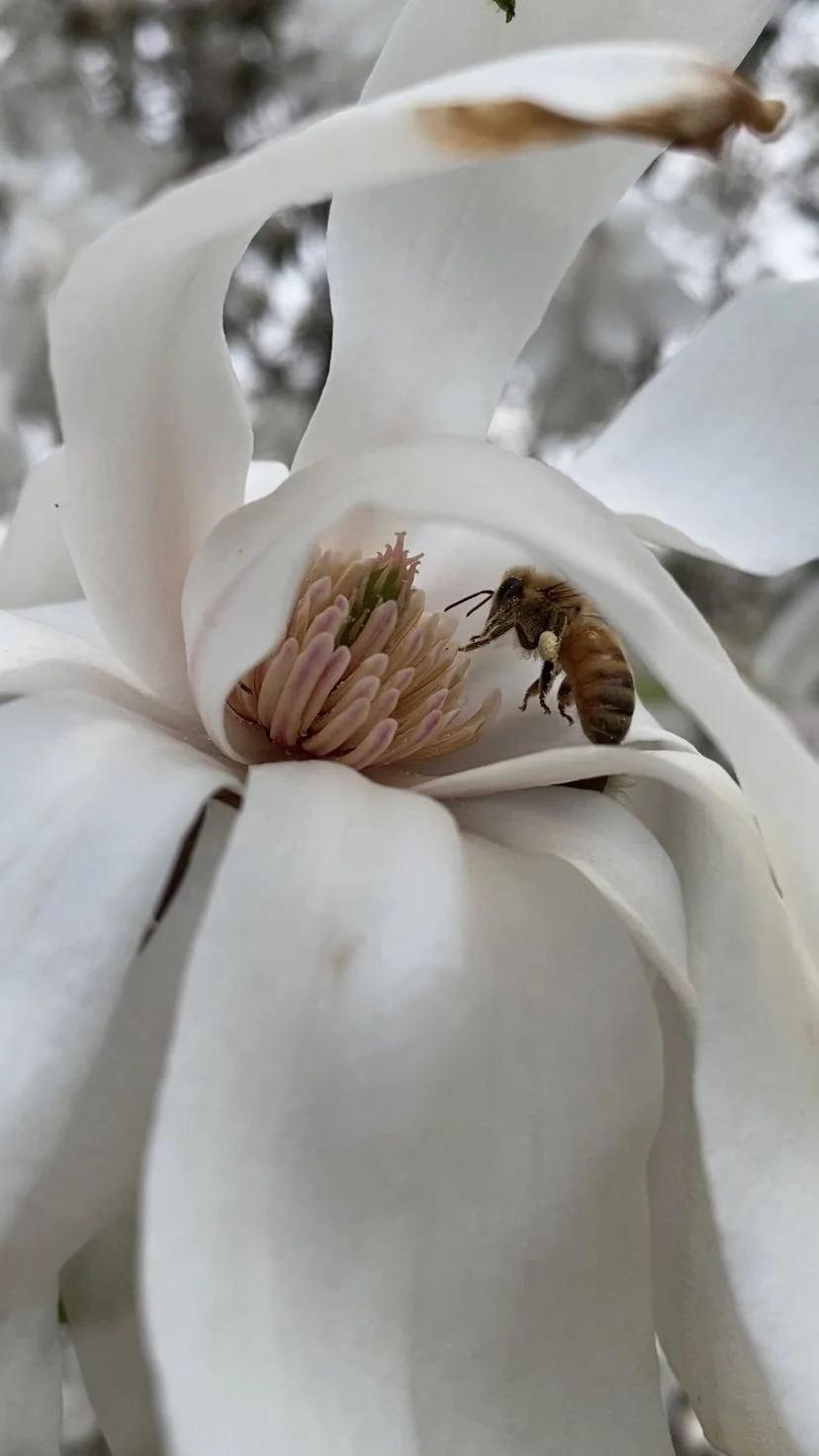
We prioritize a relationship with bees outside of the hive. We feed pollinators a rich garden for the purpose of supporting the entire food chain. Because we primarily model how an apiary can operate within the ecosystem, honey production isn’t directly incorporated into our mission. We readily provide education on the appropriate timing and methods for collecting overflow honey, and will ourselves collect honeycomb under certain conditions but we don’t set harvest goals.
Backland’s educational apiary features stationary and small-population hives that are widely spaced on biodiverse lands. We see wild mating, swarming and dying off as necessary natural processes for longevity. We promote reciprocity within the human-bee-land relationship. This means that we embrace the fluctuation of hive counts from season to season. At the core of our education, we reconnect wild intelligence with the managed hive.
Our Annual Gathering
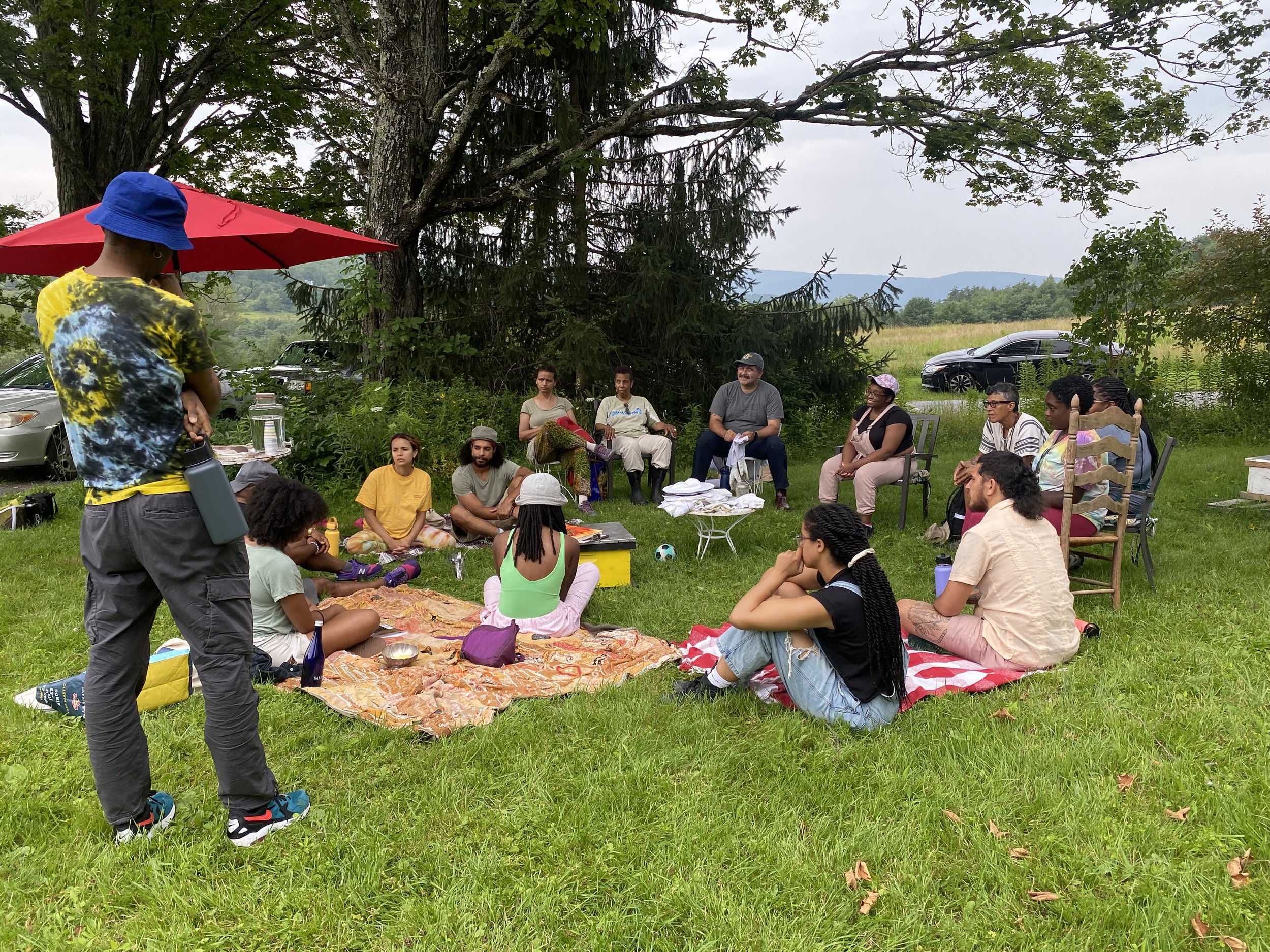
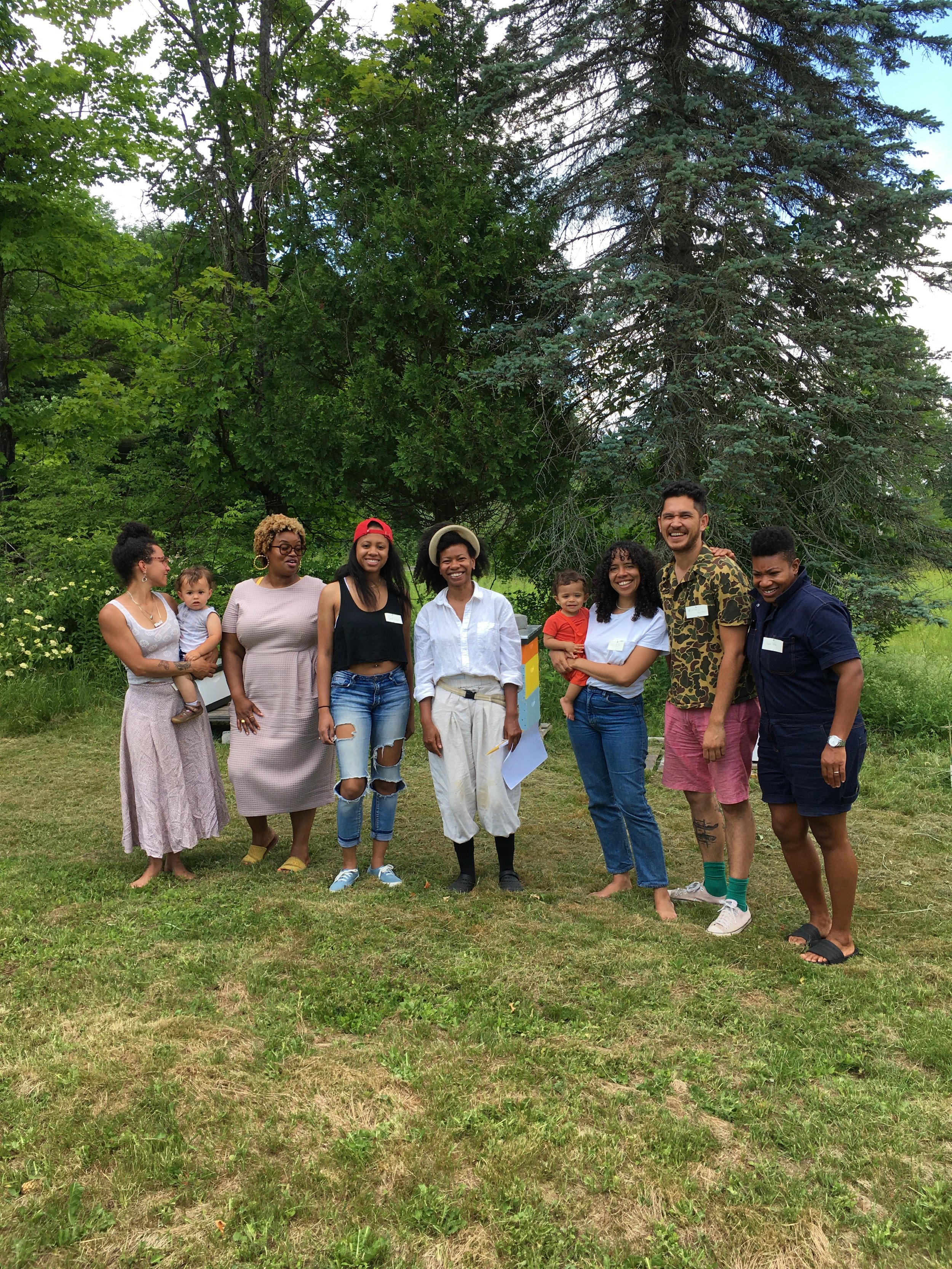
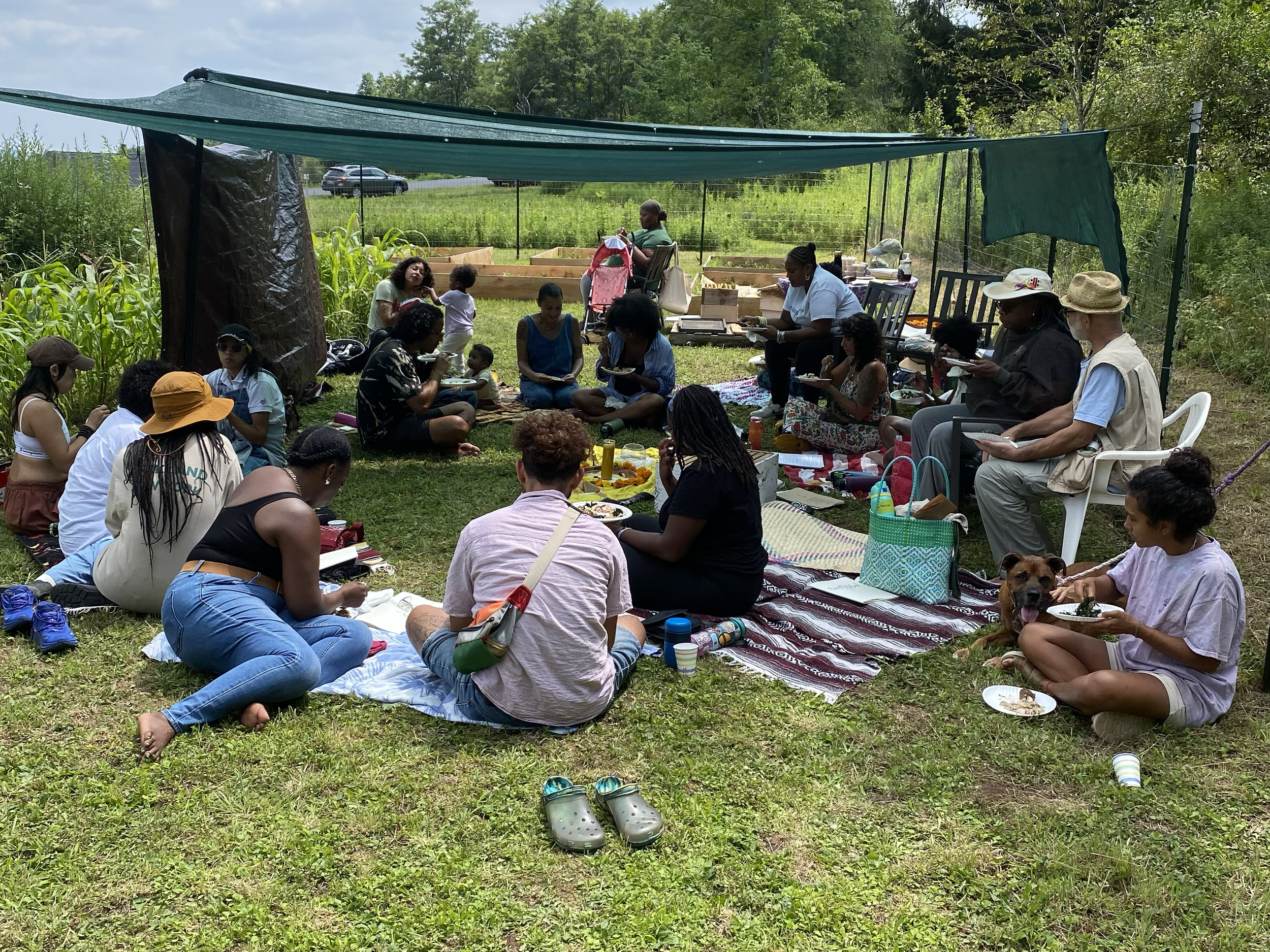
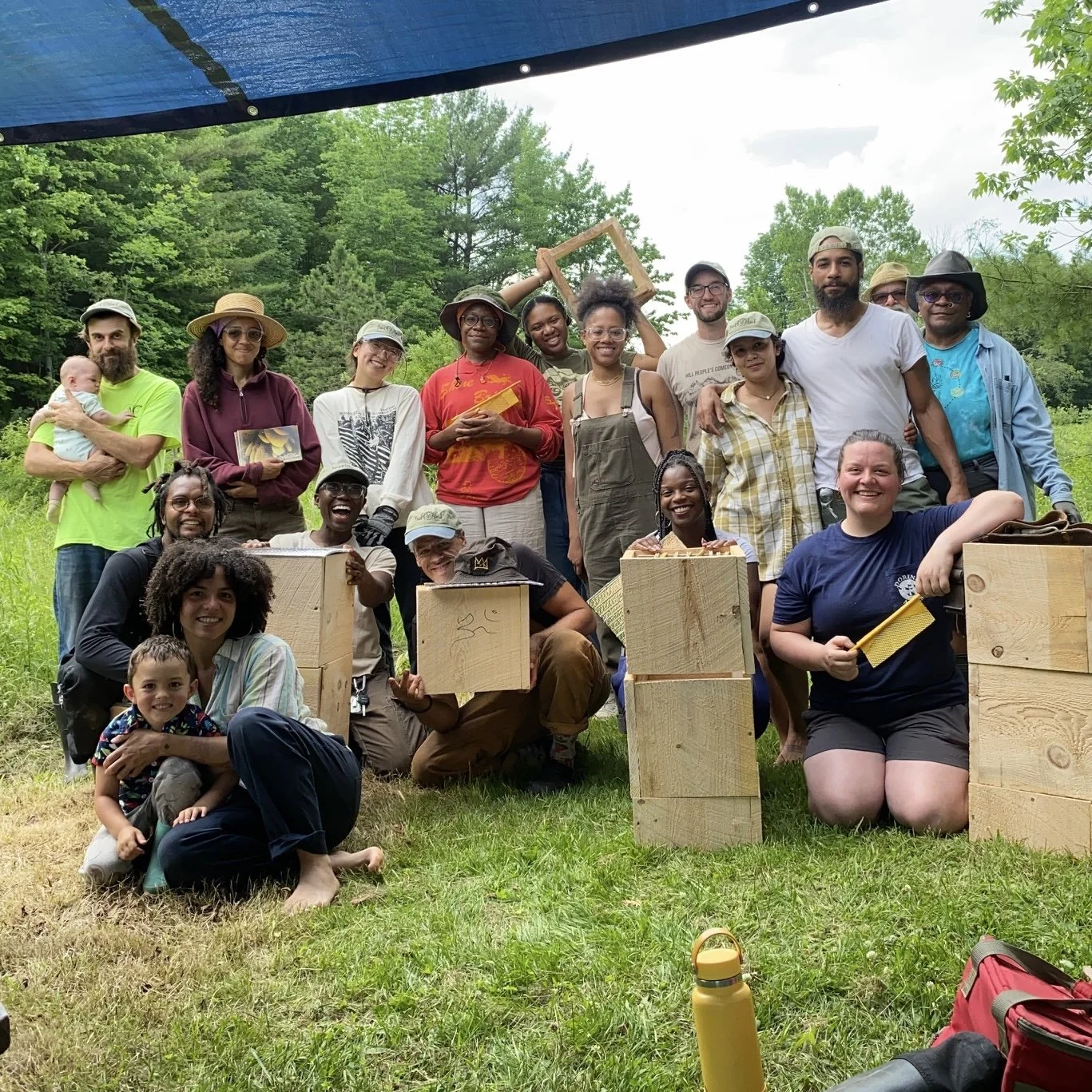
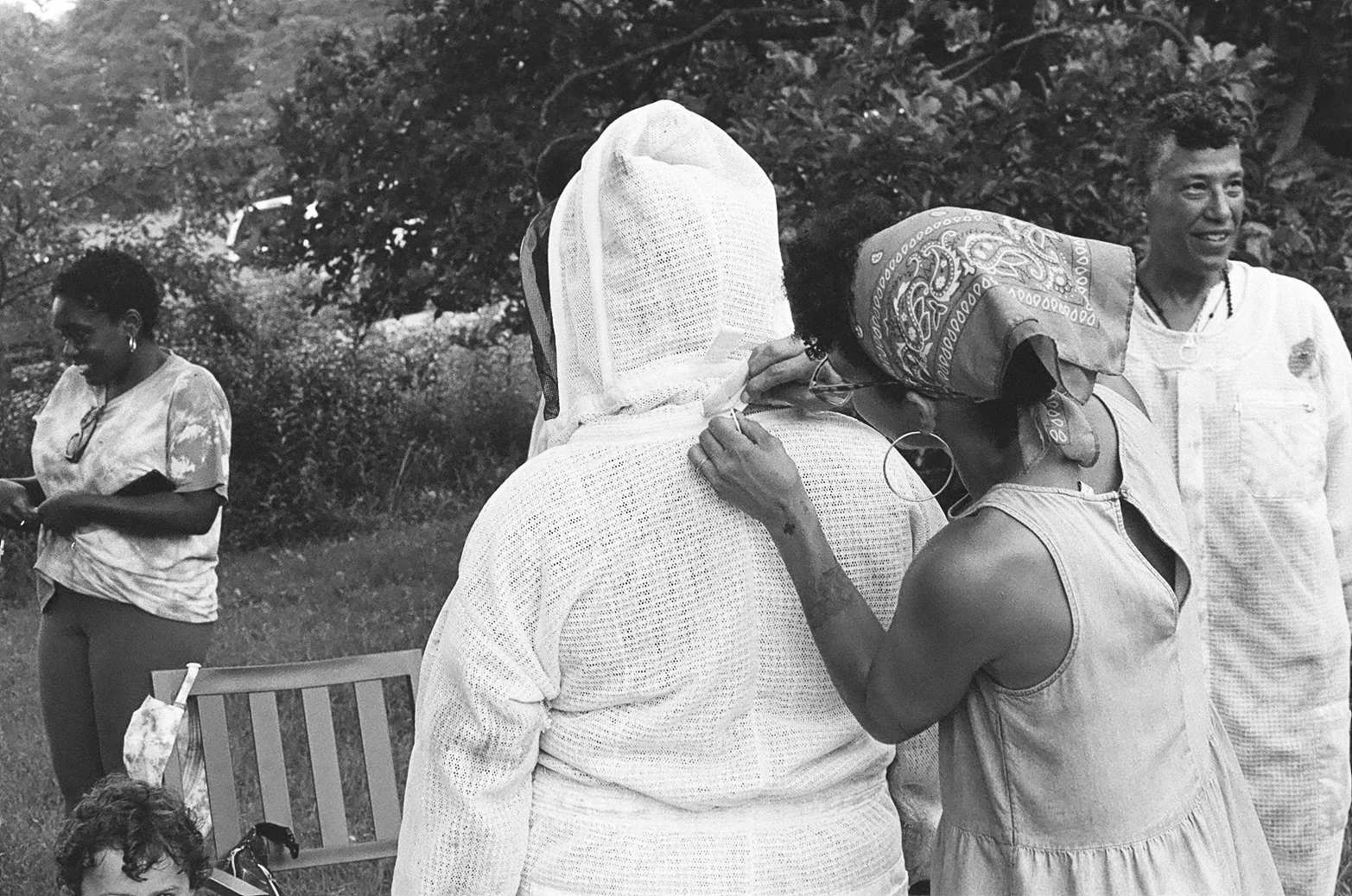
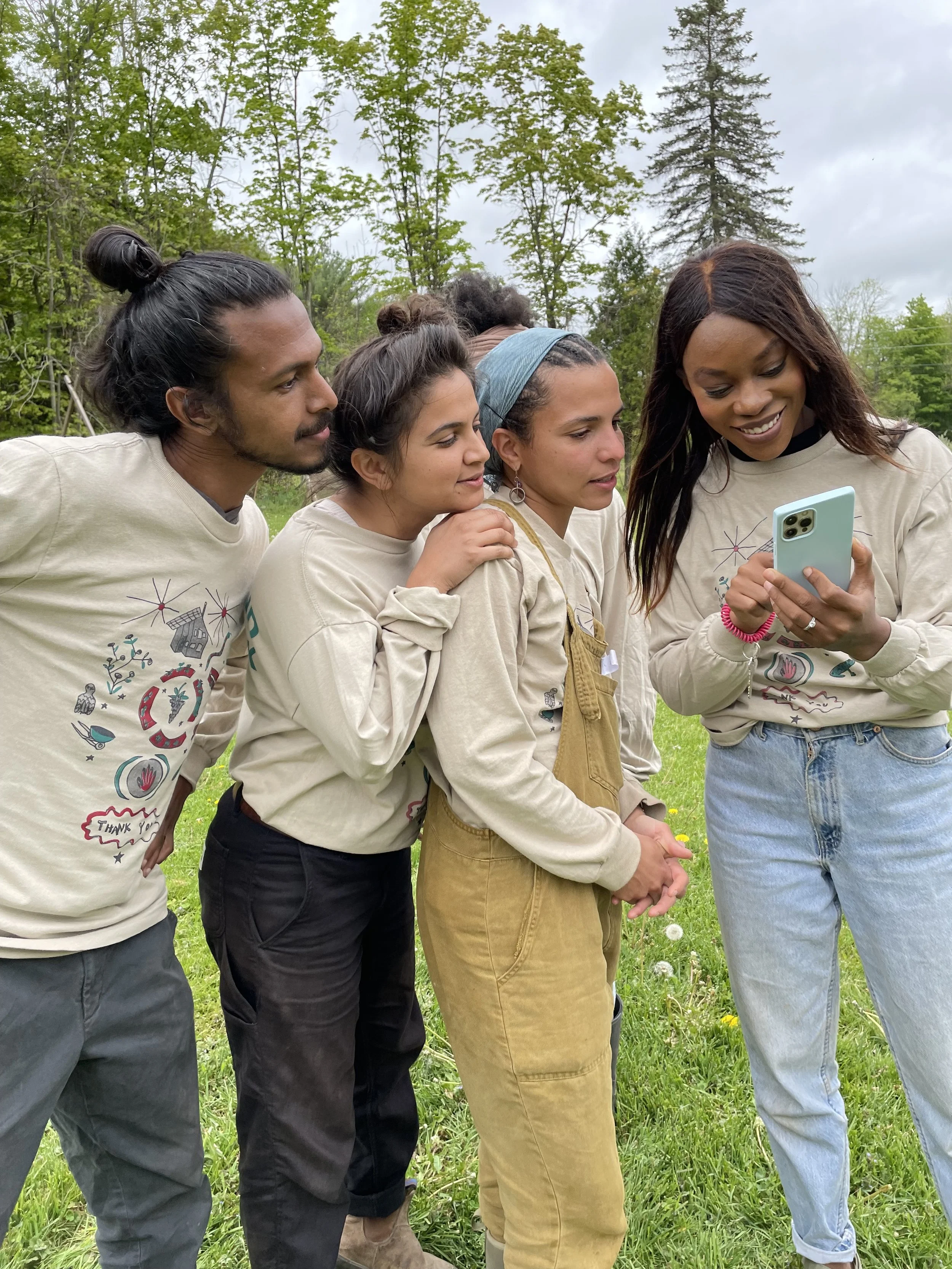
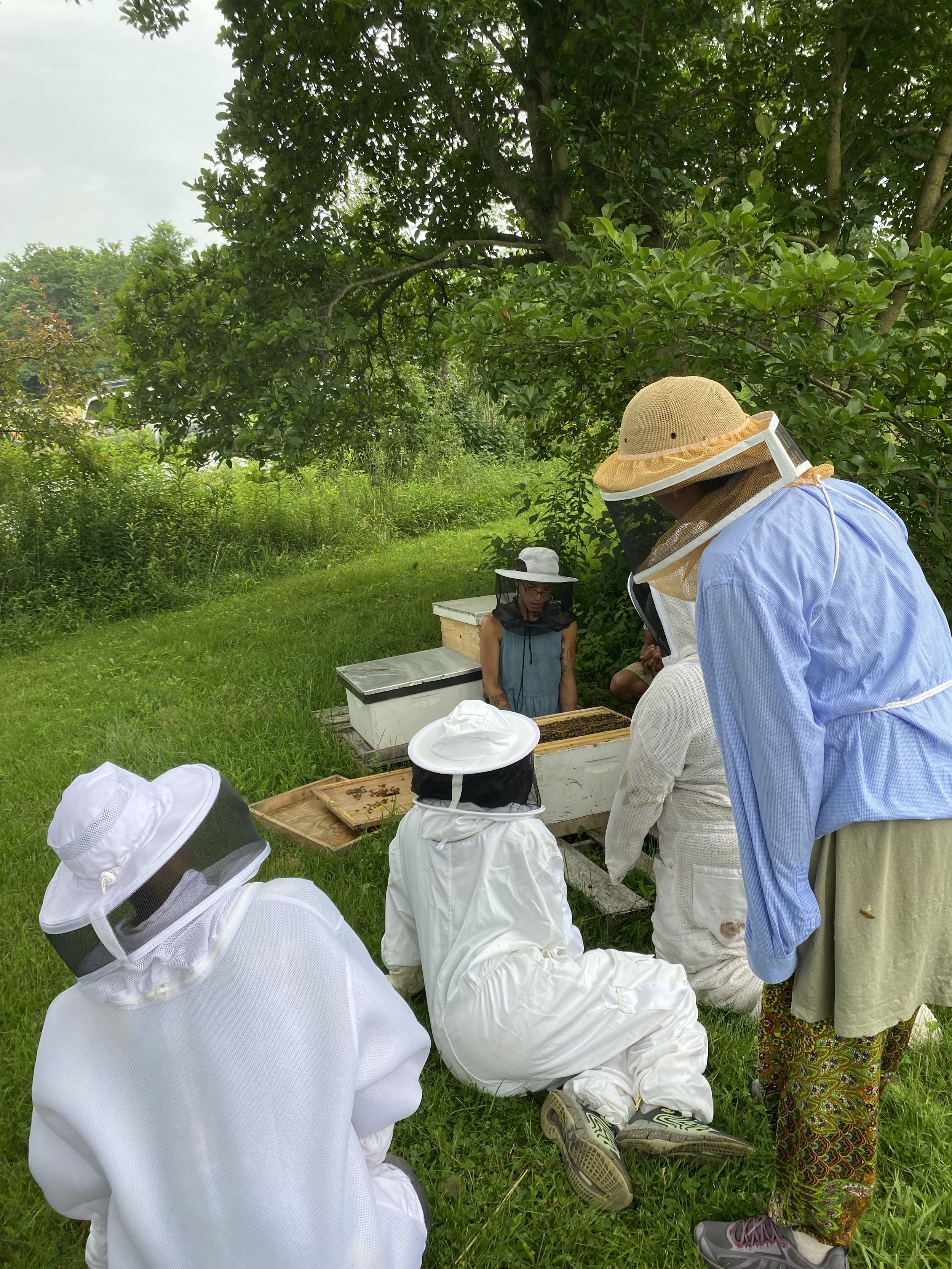
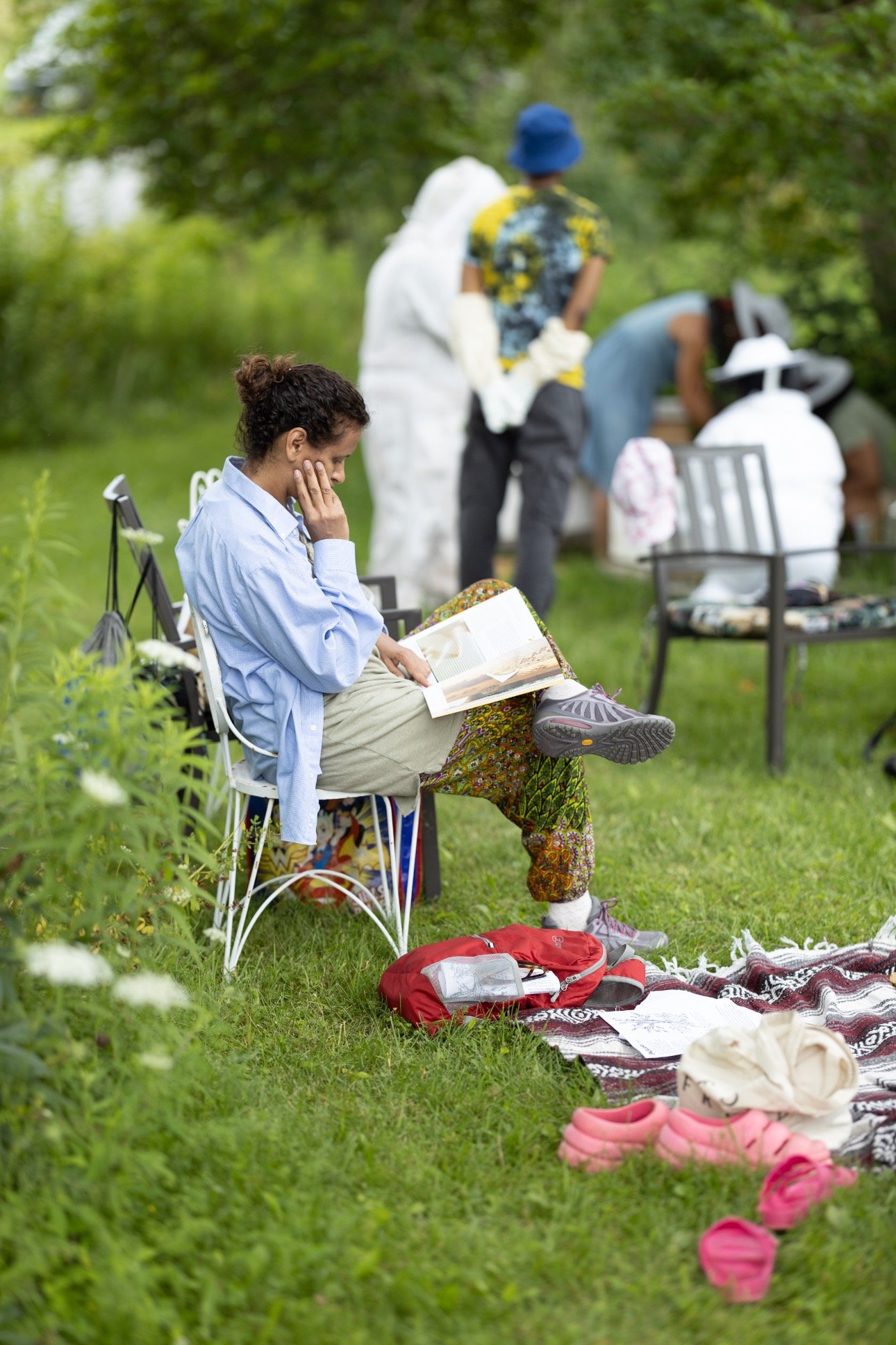
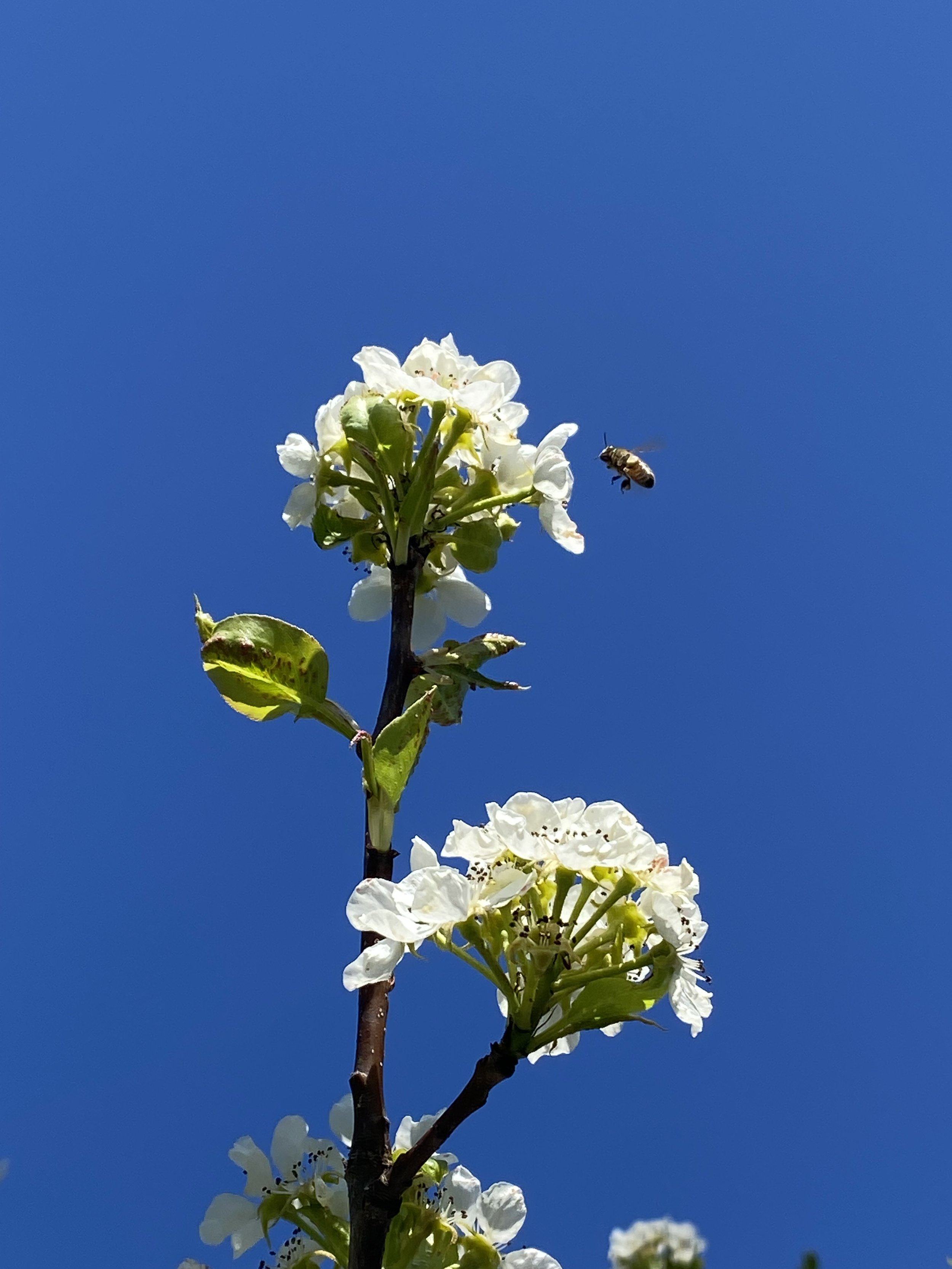
Since 2022, we’ve welcomed students to our educational apiary in central NY.
Our work applies to land stewards in the U.S. northeast considering the unique challenges pollinators face with a short season of plant collection followed by a long vacant season.
Backland distributes regenerative bee resources that center a natural habitat and decentralize the human need.
Our work builds upon the study of rewilded hives near Ithaca, NY as published by Dr. Thomas Dyer Seeley (Horace White Professor Emeritus in Biology, Cornell University). As well as the ingenuity of custom hives popularized by Sam Comfort (founder of Anarchy Apiaries and creator of the Comfort hive). Most importantly, we uphold reverence in our relationships with Mama Nature, akin to our ancestors who treated the land as a living being.
Opposing the Industry Standard
This work inevitably opposes the standard of mainstream beekeepers, which are defined and distributed by industrial apiaries. Industrial beekeepers have the important task of managing thousands of hives to pollinate the monocrops that stock year-round grocery stores. Therefore, their livelihood is tied up in a never-ending loop of intense management like frequent inspections, mite treatment, sugar feed, artificial selection and forced migration.
Seasoned beekeepers know that the “problems” of managed hives don’t go away with more management. Intense management increases pathogens and parasites and decreases the hives ability to survive on their own, thus perpetuating a cycle of management. The use of mite treatment, for example, only causes unintended consequences, like stronger mites and weaker bees. These consequences continue the need for more treatment as a short-term solution.
Additionally, the genetics of artificially selected honey bees over generations inherently become dependent on human management to survive. Through homogenizing bee genetics and popularizing an industry standard, this, of course, mostly benefits the industry which leads introductory beekeeping courses and sells bees, box hives, mite treatment and sugar feed. Today, small-scale beekeepers are stuck in an unsustainable loop of inputting more-more-more just to keep a hive alive.
This standard best suits apiaries that offer pollination services and aim to maximize honey production. Industrial practices disregard the needs of the honey bee and native pollinators, and are generally unnecessary for a community of small-scale beekeepers and organic land stewards. This point in time presents an ideal opportunity to reimagine the long-term effects of beekeeping by initiating a new feedback loop that recycles nutrients, respects local relationships and supports greater biodiversity.
Sourcing Swarms
Swarming is how a hive reproduces. When a hive splits in two—about half of the population leaves for a new nest location with the elder-fertilized Mother bee, and the remaining stays with a young-unfertilized Mother bee. Swarming signifies vitality since a hive normally reproduces after abundantly storing food and increasing the hive body (or population count).
The main benefit of swarming is the temporary pause in egg-laying, where parasites and pathogens breed. This pause allows weeks of hygienic time for both halves of the hive body and prevents the spread of deadly disease. Secondly, swarms find a new nest location within a few mile radius of the original hive. Therefore, swarm-baiting for local honey bees (rather than artificially selected genetics) employs biomimicry as instinctual hive adaptation.
One specific swarm arrived to Backland’s apiary on August 16, 2024.
According to the mainstream standard, a late-season swarm is assumed to have a minimal chance of survival. We have found the opposite to be true. This hive brilliantly stored food and reared bees in just two and half months before winter arrived. We did not feed this hive nor treat for mites.
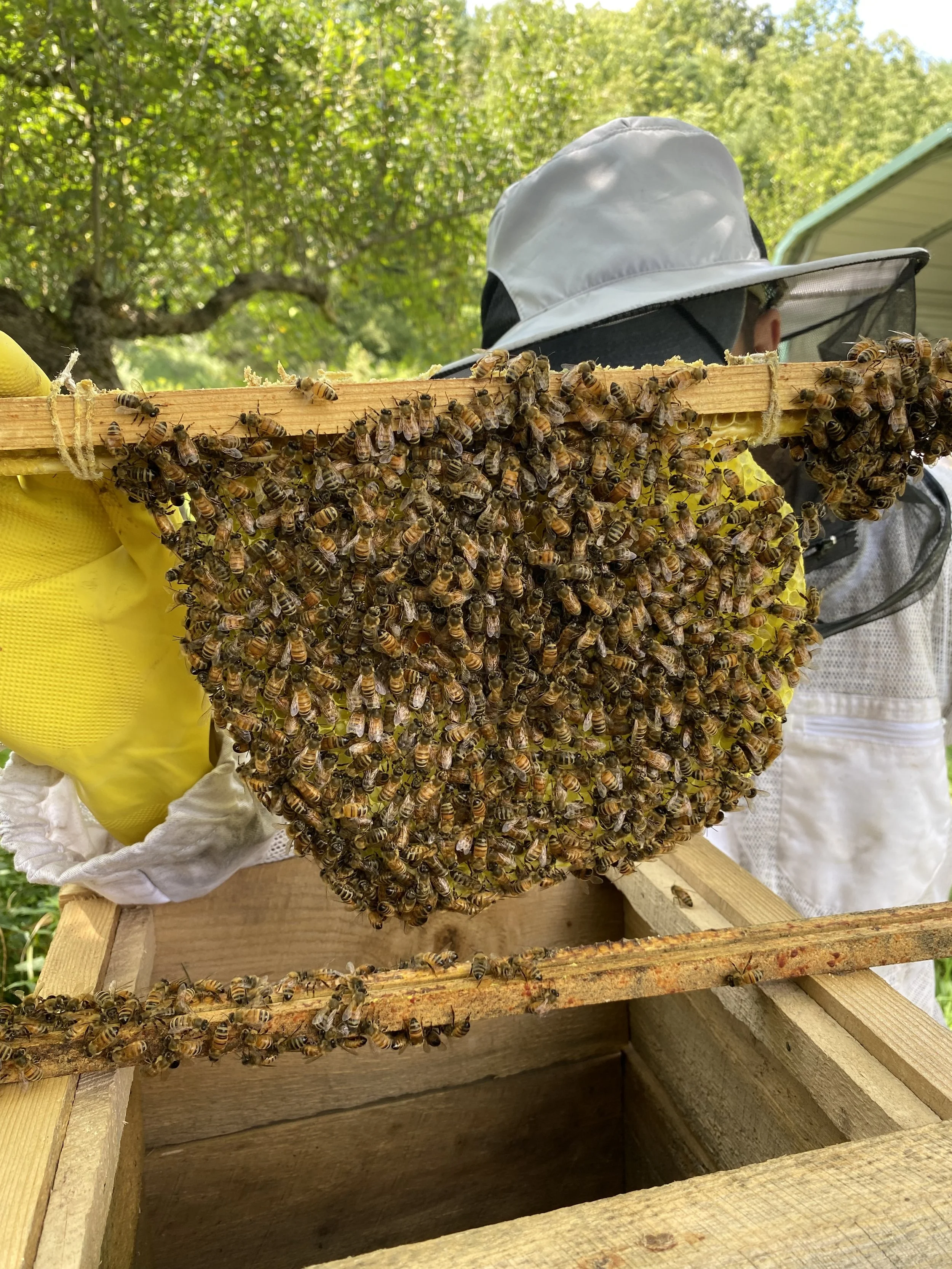
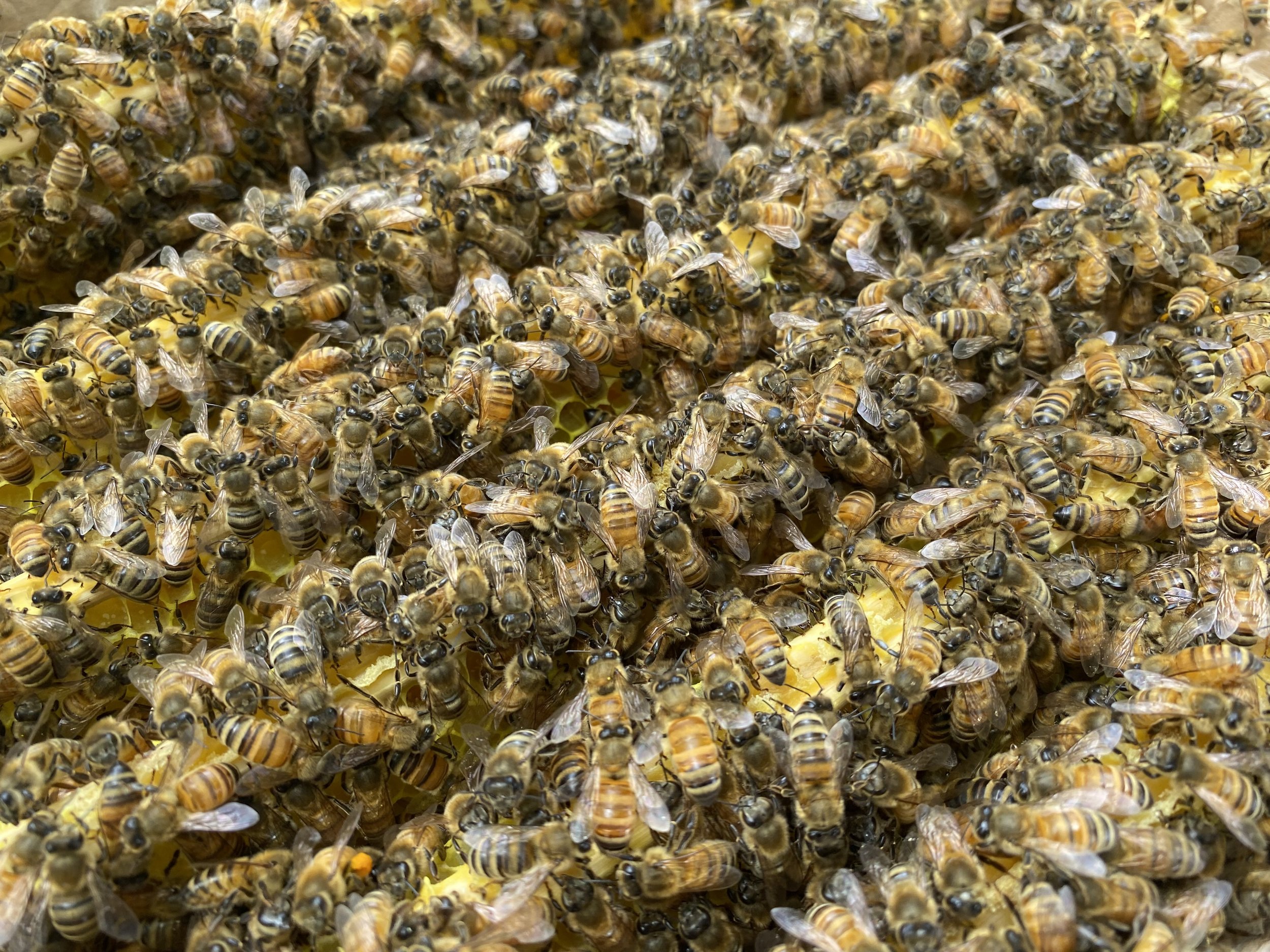
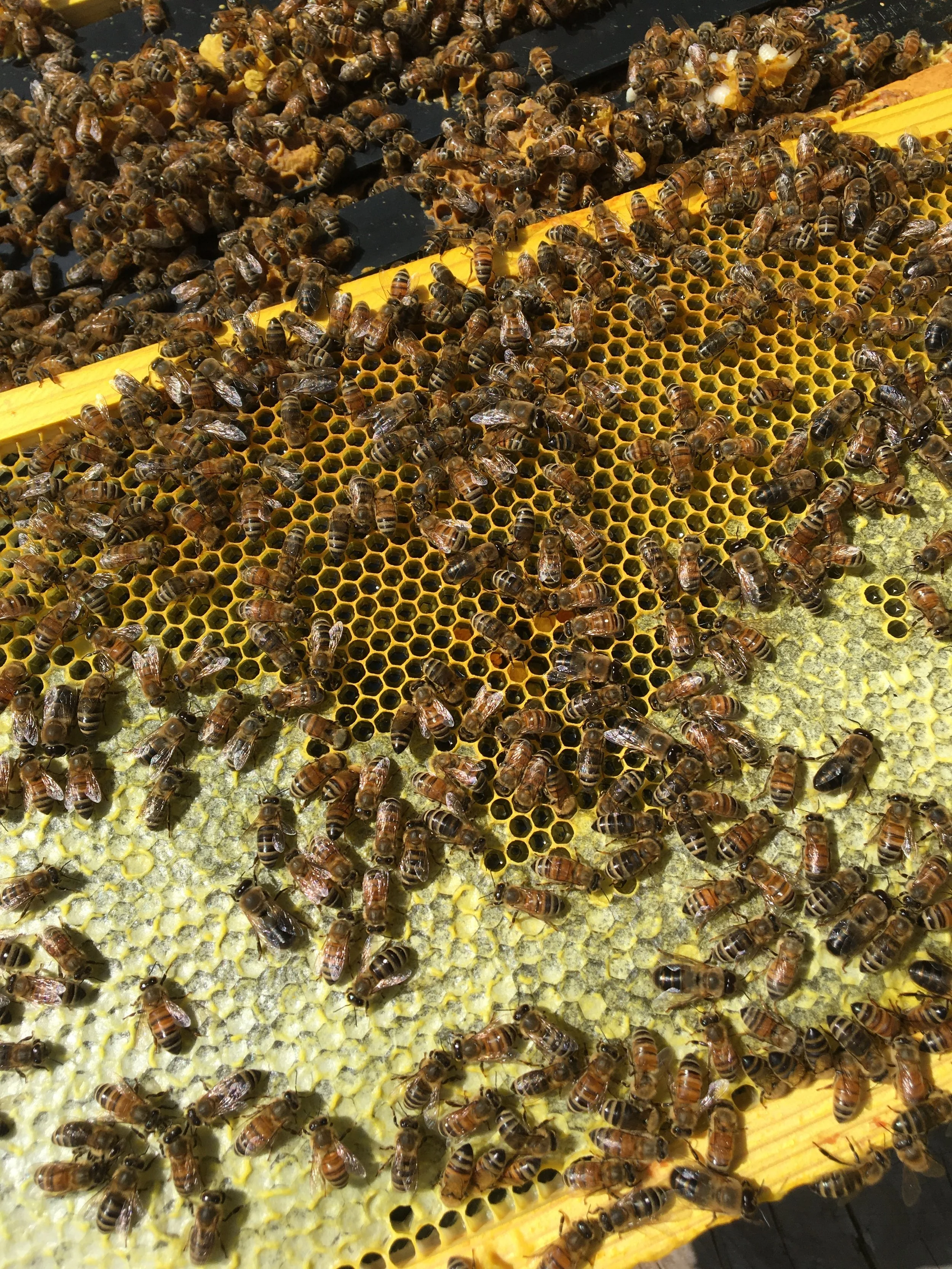
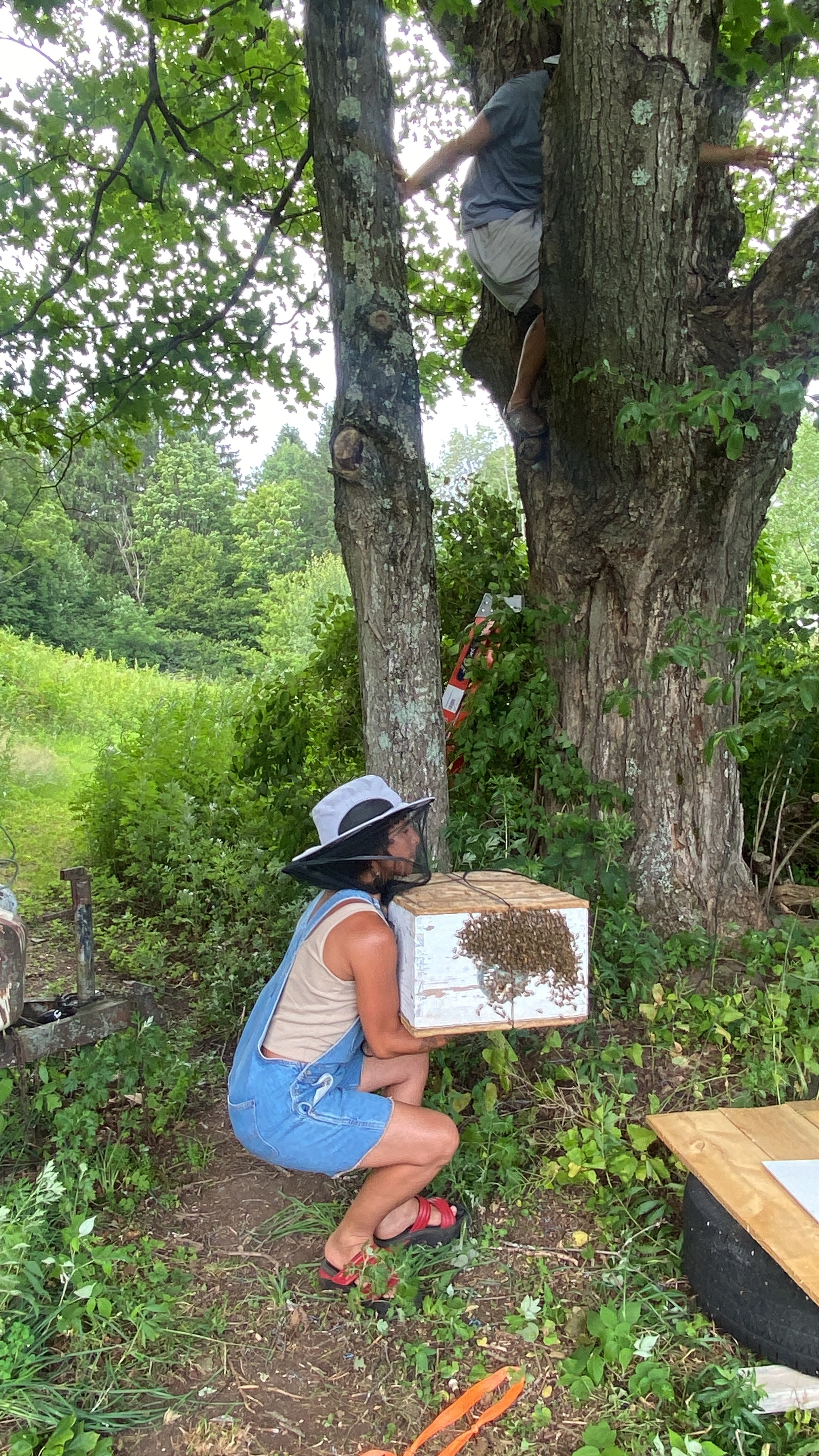
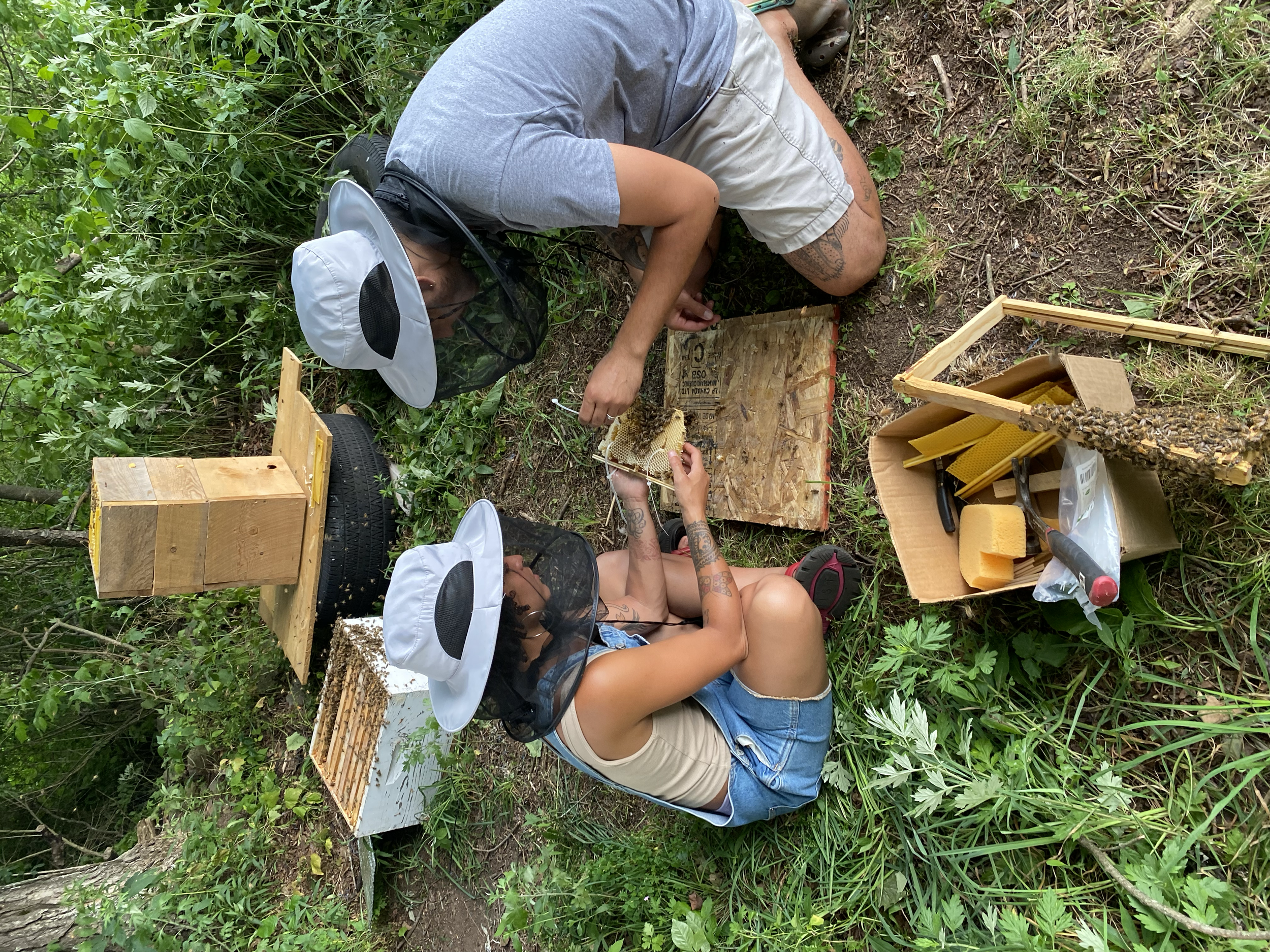
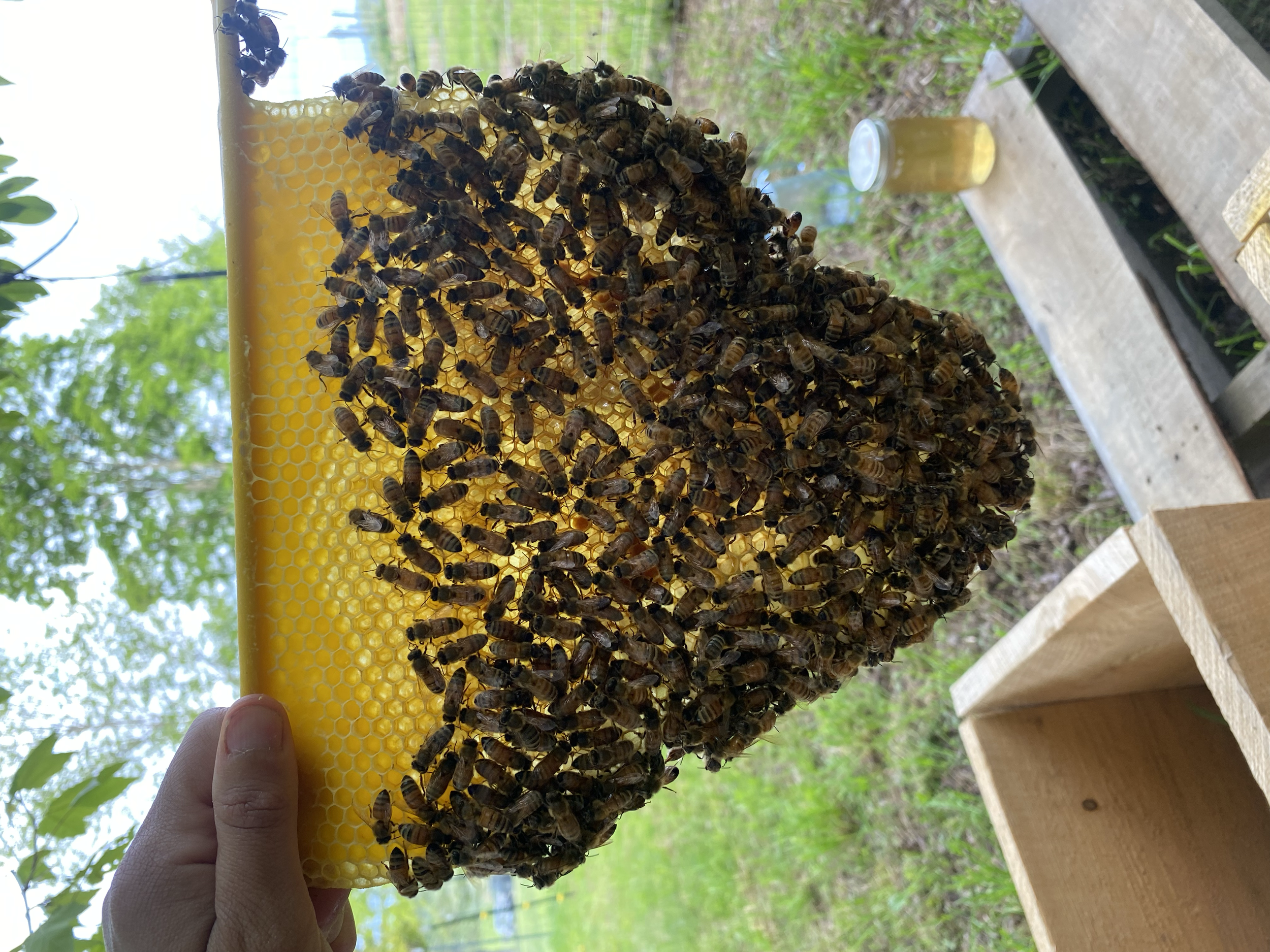
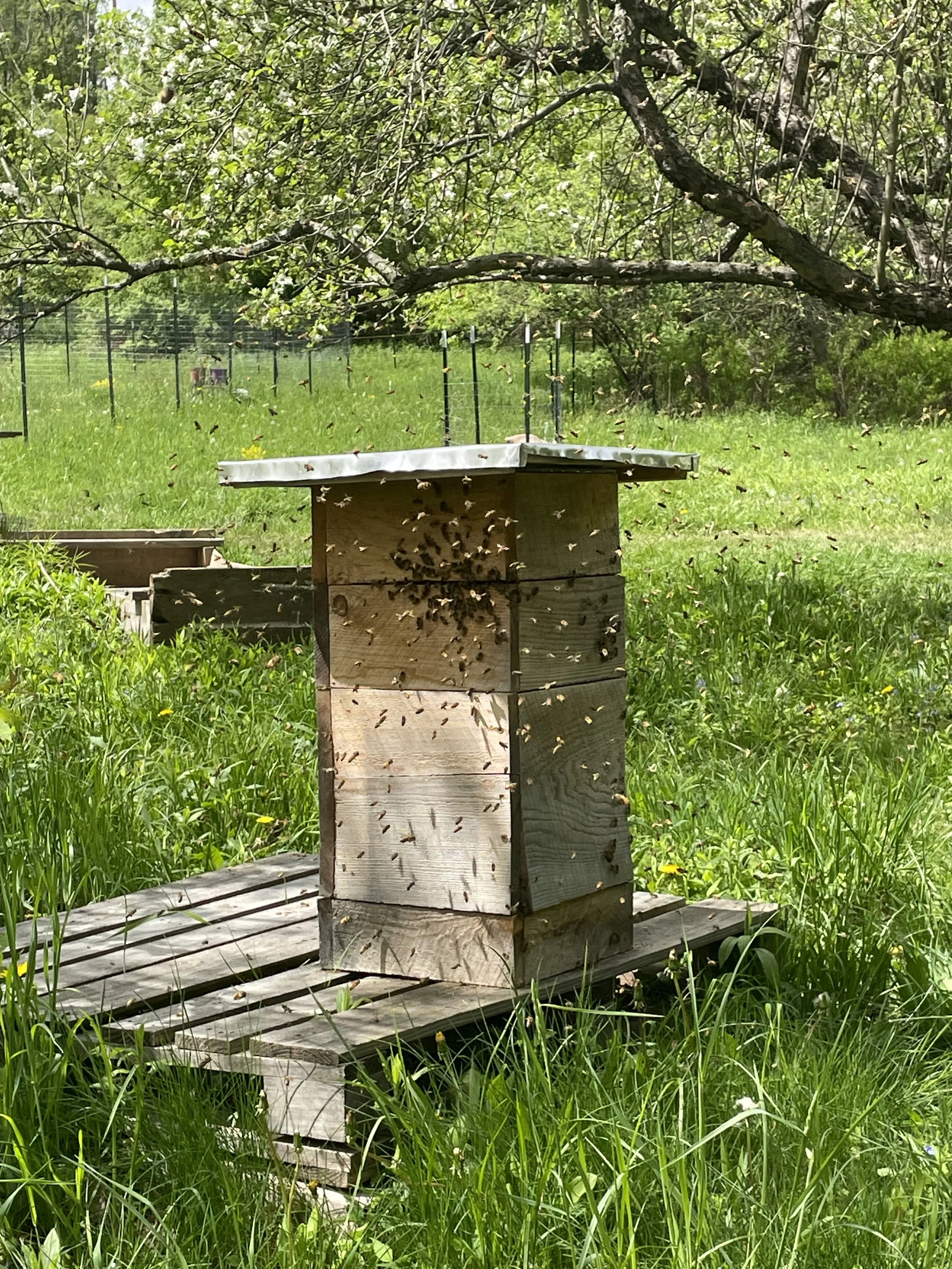
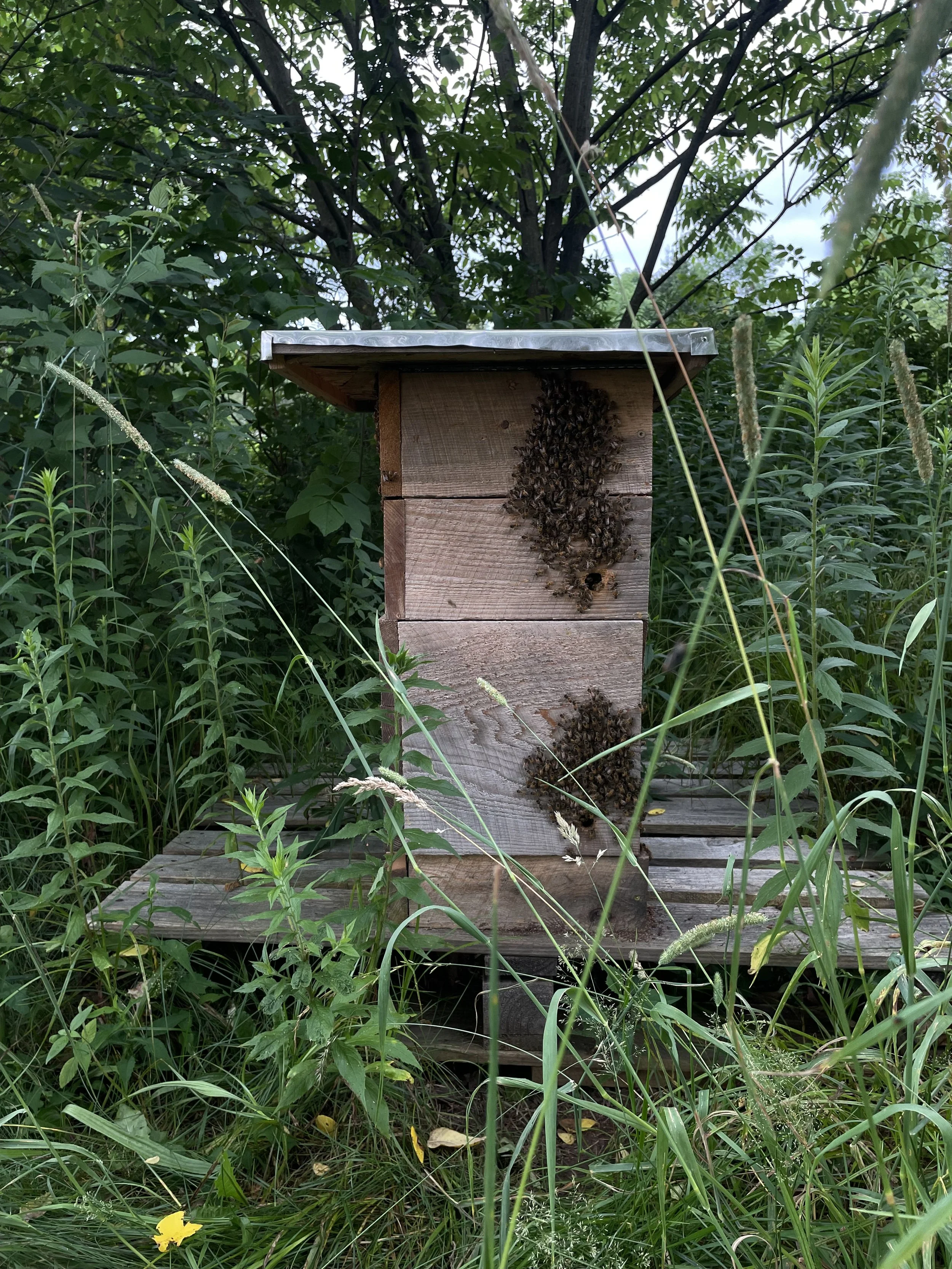
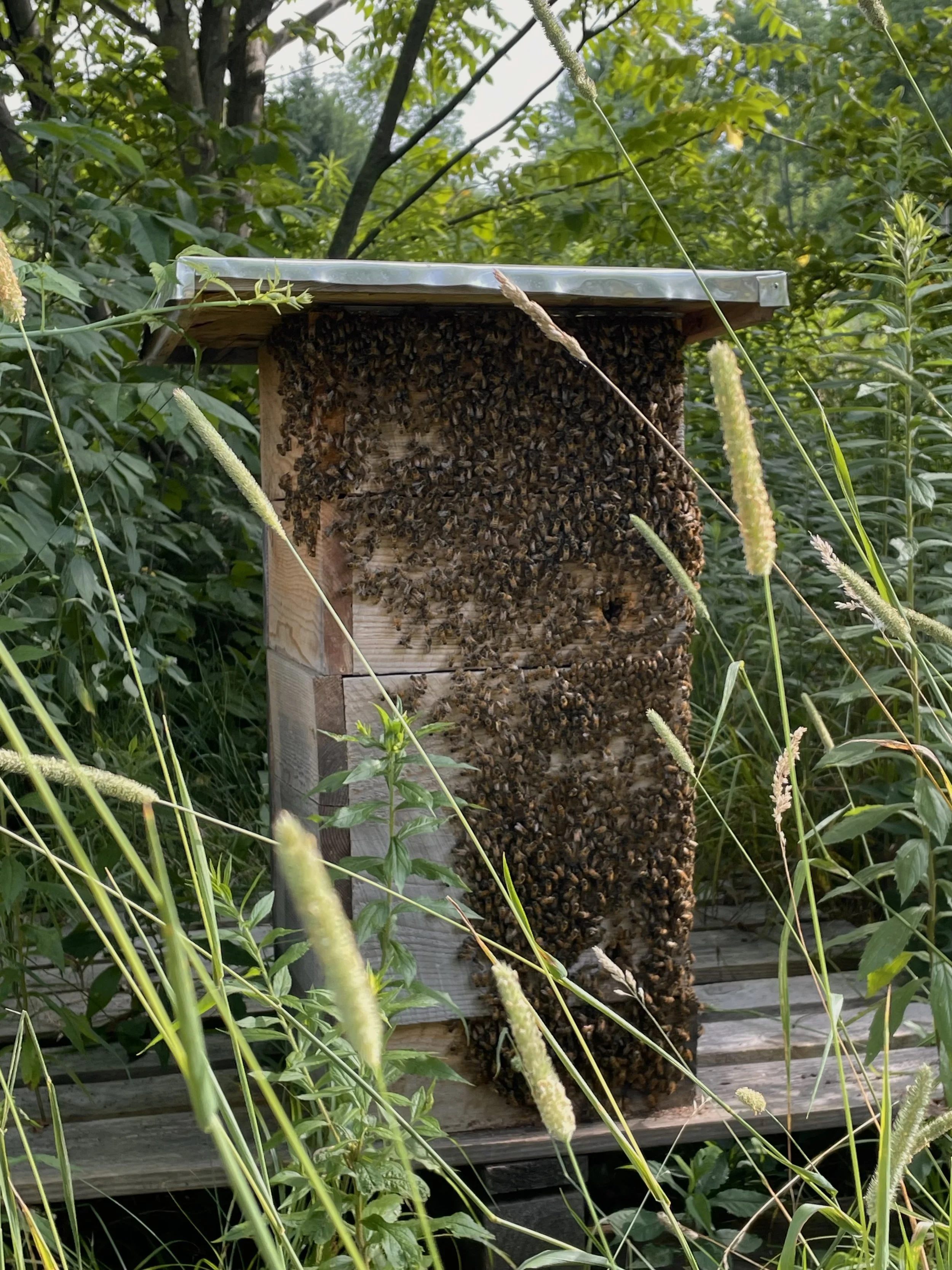
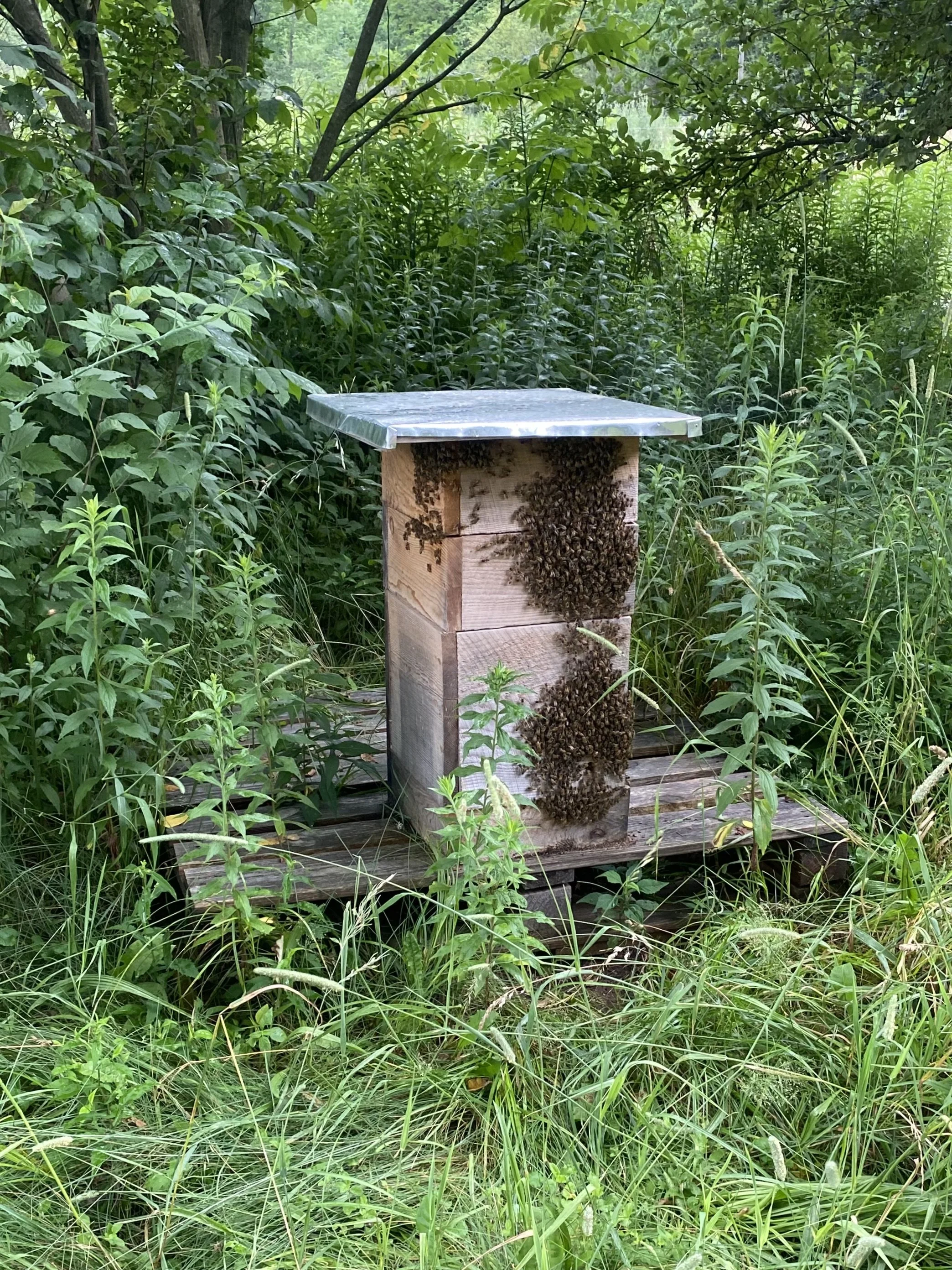
In the following Spring of 2025, this hive still appeared vigorous. We observed three respective swarms on May 15, May 26 and May 29. Then, during the peak of the summer, the hive “bearded” over two weeks, with a growing number of bees on the exterior until we observed a fourth swarm on July 29. This bearding behavior is shown in the three images above. We have reason to believe this behavior proved rewilded genetics due to their unusual success in food storage, winter survival, and swarm casting.
The video below shows how a typical swarm waits when searching for a new nest location.

Our Community
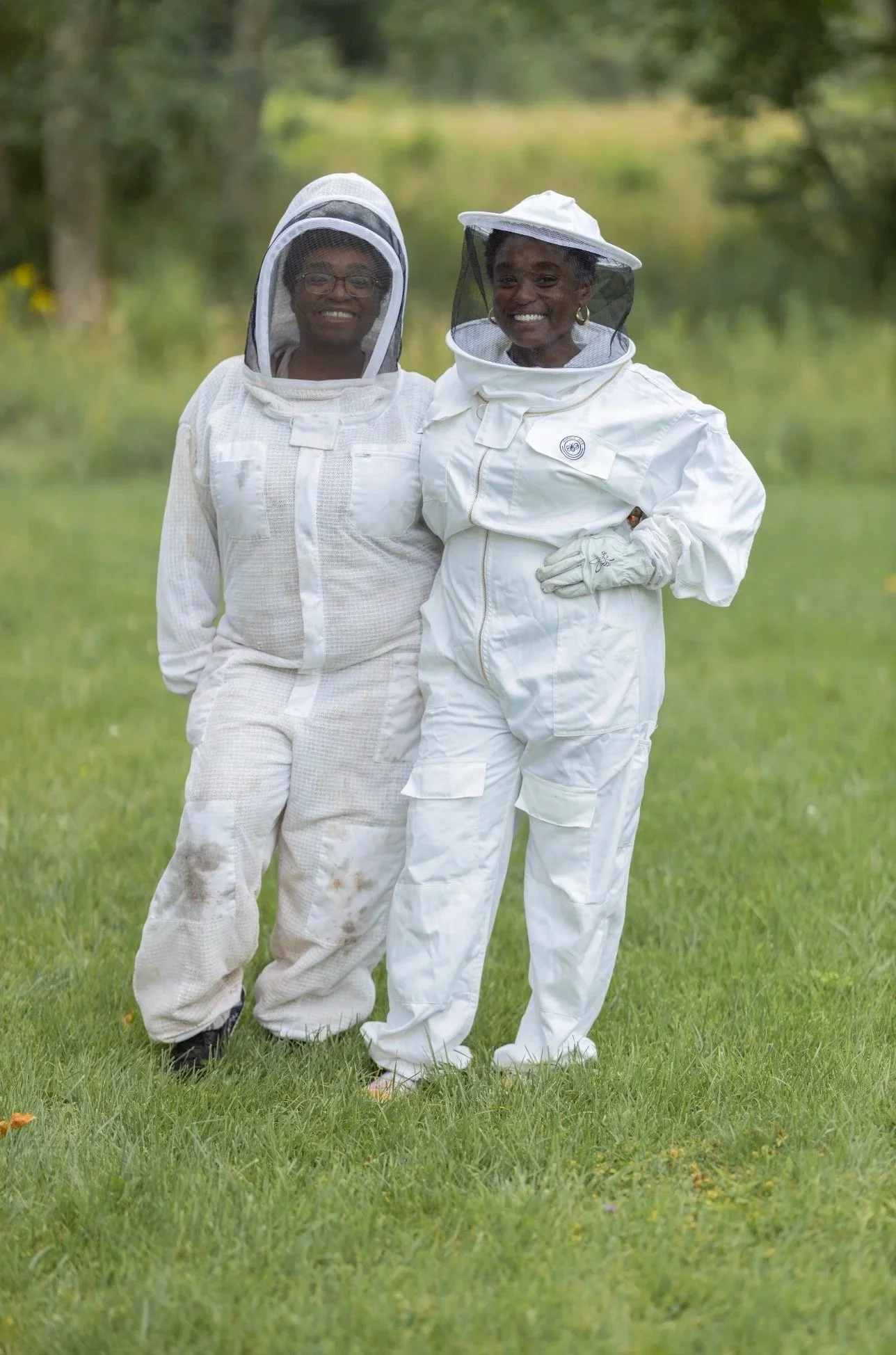
We have developed partnerships with several local farmers and land stewards across Otsego, Delaware and Schoharie counties who support our study by generously allowing access to organic agricultural, residential rural and forested lands. We also work with past participants to provide peer-mentor support and apiary resources.
Community partnerships include placing temporary bait hives, permanent beehives and making observations for open information. We also address pollinator needs on apiary lands by ensuring seasonal flows of nectar and pollen, and when necessary, we nurture a layered habitat by planting flowers, herbs, shrubs and/or trees to better support biodiversity.

Together, we’re establishing a new generation of biomimicry beekeepers.
BACKLAND NY is co-led by Alysia Mazzella, Fon Borrello, Dara Nicole Boyd